
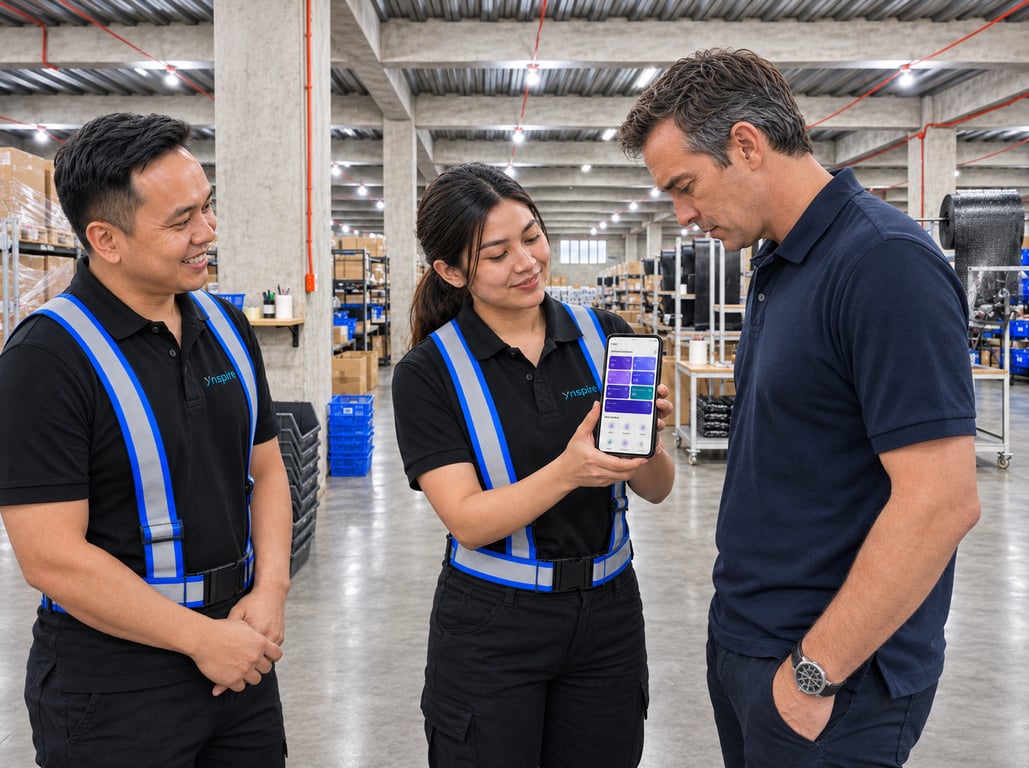
Inspire Solutions Asia is calling Philippine e-commerce brands to measure growth beyond sales, placing greater emphasis on inventory accuracy, on-time dispatch, order fulfilment and operational accountability as order volumes increase.
MANILA, Philippines, November 2026 — Philippine e-commerce is expected to reach USD 24 billion in gross merchandise value in 2025, and online retail revenue is expected to increase by 15 to 20% in 2026. This growth continues in Southeast Asia, where e-commerce is forecast to reach USD 226 billion in gross merchandise value in 2026, according to the latest e-Conomy SEA report.
For Philippine businesses selling on Shopee, Lazada and TikTok Shop, this means more opportunities to reach new customers. However, during large-scale sales and shopping campaigns such as 11.11 and 12.12, higher order volumes in shorter time frames may test businesses’ inventory accuracy, dispatch logistics, and order fulfilment capabilities.
Inspire Solutions Asia, the modular e-commerce backbone for the Philippines, believes these metrics matter as much as sales and customer acquisition.
Inspire says growth should be measured not only by how many orders businesses can take, but by how many they can fulfil.
Why the Philippines’ market requires reliable execution
The Philippines has a unique e-commerce operating environment, with varying payment preferences, marketplace requirements and customer expectations that impact how and where orders are fulfilled.
Cash-on-delivery (COD) payments remain prominent in the Philippines. According to the 2026 Ecommerce Payments Momentum Report by Xendit and Cube, COD accounted for about 23% of the total value of Philippine e-commerce transactions processed on the Xendit payment platform in 2026, the highest share of any of the six Southeast Asian markets analyzed.
The report also found that 12% of Filipino respondents said nothing would convince them to stop using COD. The Philippines is projected to be the only market among those analyzed where COD will account for more than a fifth of e-commerce value in 2027.
Reliable order fulfilment becomes more important for businesses as a result. With COD orders, payment is only received upon delivery of the order. If the wrong items are shipped, delivery expectations aren’t met, or order issues aren’t resolved, the likelihood of an order being returned or unsuccessful increases.
Multi-marketplace selling further complicates order fulfilment. Without consolidated inventory management, stock listed and sold on one marketplace may still be available to be sold on another, even when inventory is low or sold out. During high-volume sales and shopping campaigns, the time between detecting and rectifying these issues may impact dispatch performance and customer experience.
“A successful sale doesn’t end at checkout. The inventory has to be accurate, the order has to leave on time, and someone needs to take responsibility when something goes wrong. These are the everyday operating standards that allow businesses to grow consistently,” said Darwin Bustillo, CEO of Inspire Solutions Asia.
Measuring growth beyond sales
Inspire is urging e-commerce businesses operating in the Philippines to place more importance on metrics such as inventory accuracy, on-time dispatch, order exception resolution and returns processing.
These metrics provide businesses with insights into where improvements may be needed in their operations, especially during periods of increased order volume. But it’s not just about measurement. Businesses need to understand how their marketplaces, warehouses and delivery partners operate, and what issues need attention.
Instead of continuing to add new service providers, staff or software to accommodate growth, Inspire is advocating for businesses to pinpoint the areas of their operations that need more visibility, alignment or execution support.
This thinking informed the development of Fusion, Inspire’s e-commerce operations platform, which integrates order and warehouse management and provides visibility into inventory, dispatch, exceptions and marketplace performance.
Fusion is just one piece of Inspire’s overall modular e-commerce ecosystem, which includes integrations with its suite of operational services such as importation, warehousing, fulfilment, delivery and returns. Together, the platform and services enable businesses to adopt capabilities incrementally as their operations grow.
With its experience supporting e-commerce operations in the Philippines, Inspire believes that linking visibility to execution can help businesses manage growth more consistently.
Building operational readiness beyond peak season
While sales and shopping campaigns may present additional challenges to fulfilment operations, Inspire believes that operational reliability should be a priority outside of seasonal sales events.
For local businesses, this means questioning whether their current systems are capable of handling increased order volume and sales channels without sacrificing fulfilment reliability. For international businesses looking to enter the Philippines, this means evaluating local fulfilment capabilities, technology and accountability.
“Growth alone doesn’t tell the whole story. Businesses also need to know whether their operations can sustain it. Since launching in 2023, Inspire has onboarded about 40 brands and maintained an average 98% on-time dispatch rate across 1 million orders. These are some of the metrics that businesses should be looking at in addition to sales growth,” Bustillo added.
As businesses review their performance during large-scale sales and shopping campaigns and prepare for the next stage of growth, Inspire hopes to raise awareness around what happens after checkout and make reliable execution a more visible metric for business growth.