
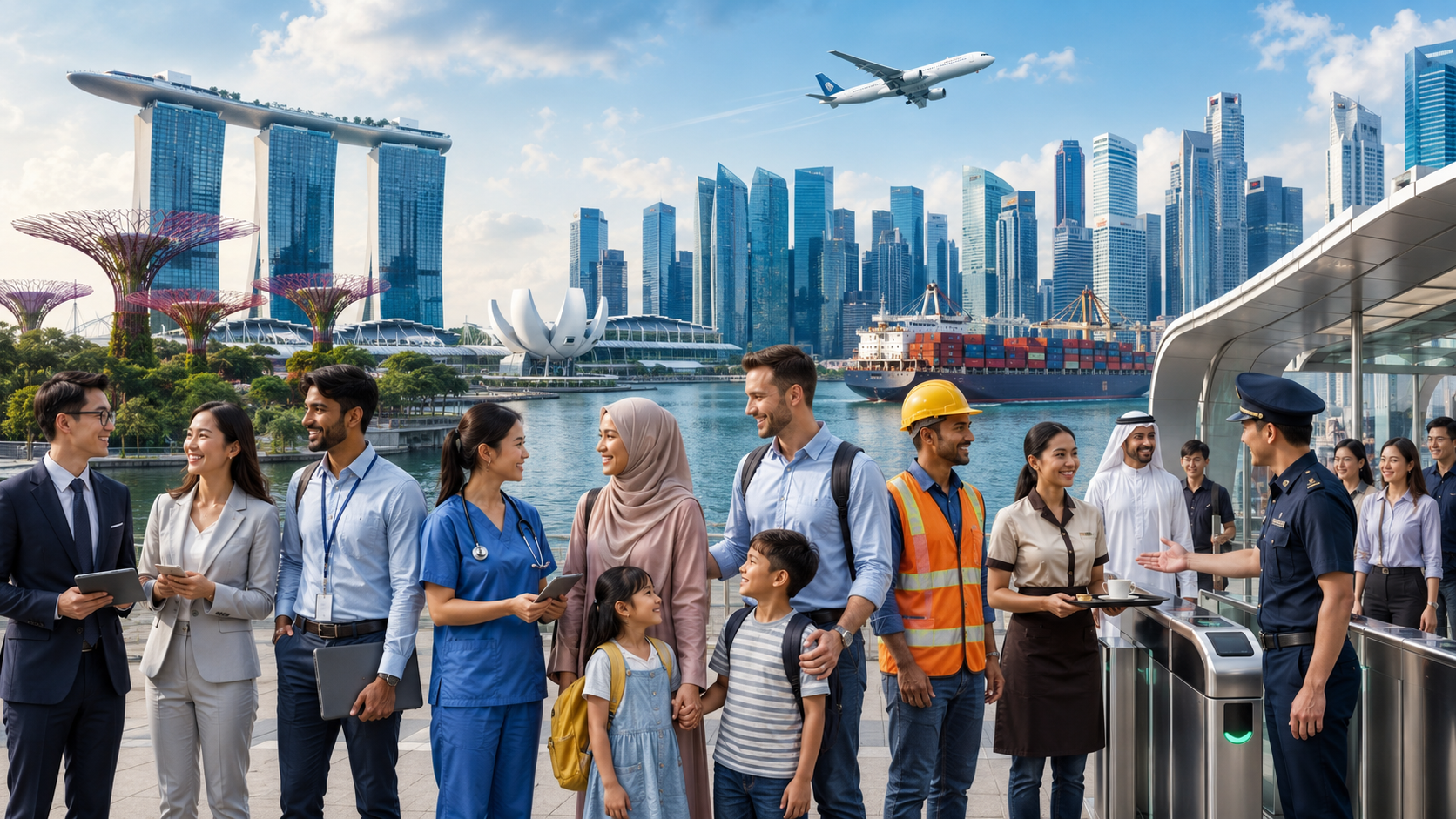
Singapore’s immigration policy is one of the most important instruments used to shape the country’s future. As a small city-state with a global economy, Singapore must constantly think about population, talent, security, and social harmony. Immigration is not treated as a simple matter of allowing more people to live and work in the country. It is managed as part of a broader national strategy to support development while protecting the unity of society.
Economic competitiveness is one of the strongest reasons for Singapore’s immigration approach. The country needs skilled people to remain successful in fields such as finance, technology, research, advanced manufacturing, education, and healthcare. Foreign professionals help fill expertise gaps, support innovation, and strengthen Singapore’s role as a regional headquarters for international companies. Work passes for professionals are therefore designed to attract individuals with strong qualifications, relevant experience, and salaries that reflect their value.
Singapore also relies on foreign workers in sectors that are essential but less attractive to many locals. Construction workers build infrastructure and housing. Domestic workers support families, children, and elderly residents. Service and maintenance workers help keep the city clean, safe, and efficient. These contributions are significant, but they are carefully regulated. Quotas, levies, and permit conditions help control numbers and encourage employers to use manpower responsibly.
A major challenge is ensuring that immigration benefits the whole country, not only businesses. Many Singaporeans worry that too much foreign competition could affect job opportunities, wages, and career progression. To address this, the government links immigration policy with fair employment rules and skills development. Companies are expected to hire responsibly, and citizens are encouraged to upgrade their abilities throughout their working lives. The aim is to make foreign talent complementary to the local workforce rather than a replacement for it.
Social cohesion is equally important. Singapore’s society is built on a delicate balance among ethnic, religious, and cultural communities. Immigration increases this diversity by bringing in people from many countries and backgrounds. This can make the nation more cosmopolitan and creative, but it also requires active integration. New residents are expected to respect local laws, public norms, and the principle of harmony among different groups. Community involvement, workplace interaction, and shared public institutions help reduce social distance between newcomers and locals.
The government is especially cautious when granting permanent residence and citizenship. These statuses are not given automatically after a person works in Singapore for a certain number of years. Applicants are assessed for their economic contribution, family situation, education, age, length of stay, and ability to become part of Singaporean society. This selective process helps Singapore manage population growth and ensure that long-term residents are likely to strengthen the country.
Immigration policy also supports demographic stability. Low birth rates and an ageing population create pressure on the workforce, healthcare system, and public finances. Carefully selected immigrants can help maintain a productive population and support future economic growth. However, this must be balanced against land constraints, housing demand, transport capacity, and citizens’ sense of belonging.
Singapore’s approach demonstrates how immigration can be used as a tool for nation-building. The country welcomes people who contribute to its development, but it also sets clear expectations and firm rules. By combining openness with regulation, and diversity with integration, Singapore works to build a society that is competitive, multicultural, and socially stable.