
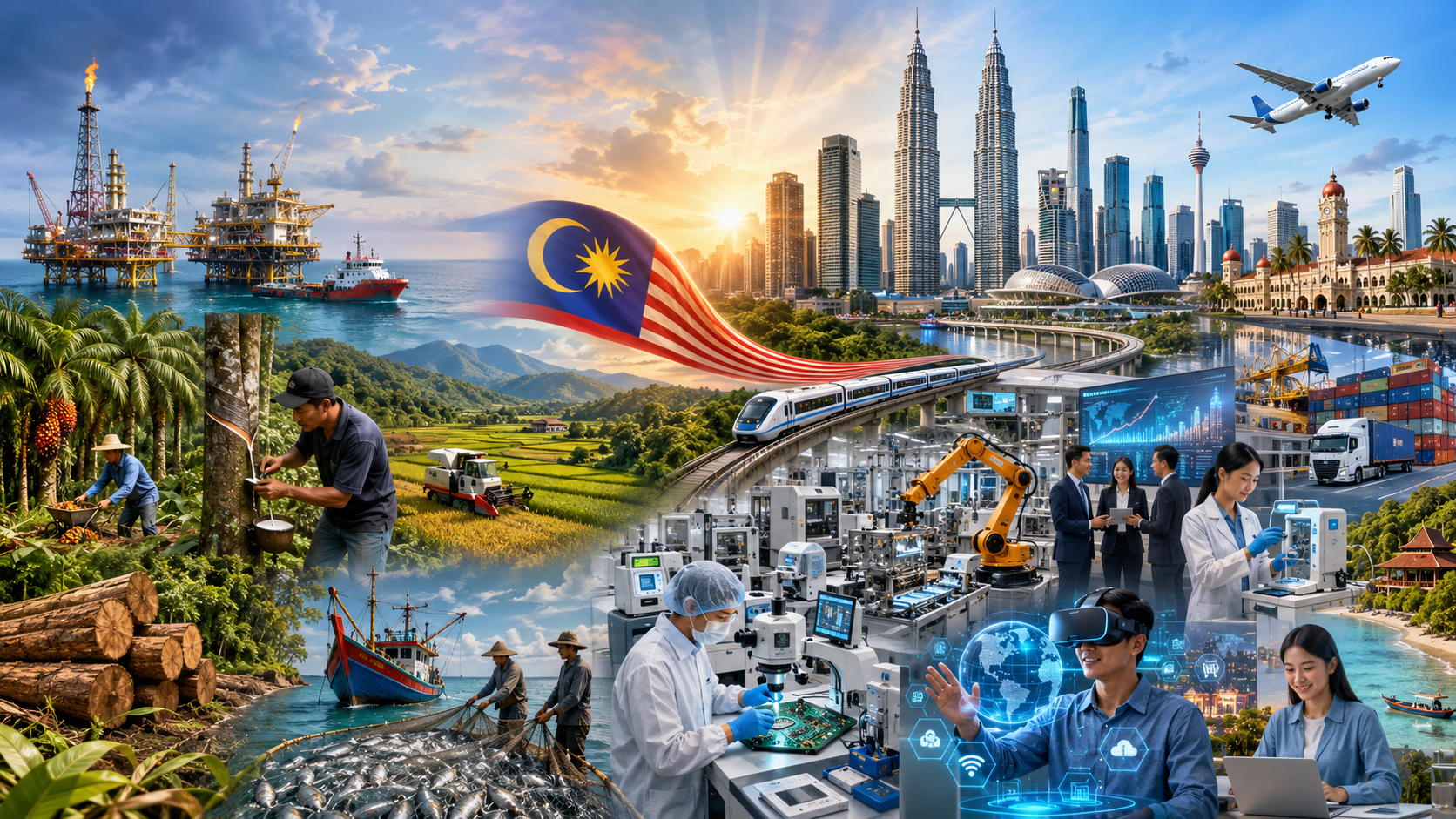
Malaysia’s economy has been shaped by two important forces: the abundance of natural resources and the country’s effort to build a more diversified economic structure. For many years, Malaysia gained income from commodities such as rubber, tin, timber, palm oil, petroleum, and natural gas. These resources provided the financial base for infrastructure, education, industrial development, and public services. However, Malaysia also understood that natural resource wealth alone could not guarantee long-term stability. As a result, the country gradually expanded into manufacturing, services, finance, tourism, and technology.
Oil and natural gas are among Malaysia’s most valuable natural resources. The country has significant offshore reserves, especially around the east coast of Peninsular Malaysia and in the waters near Sabah and Sarawak. These resources have contributed to export earnings, government revenue, and energy security. The petroleum industry also supports other economic activities, including refining, petrochemicals, shipping, maintenance services, and engineering. PETRONAS, Malaysia’s national oil company, has played a major role in developing the energy sector and strengthening Malaysia’s position in international markets.
Palm oil is another major component of Malaysia’s resource-based economy. Malaysia is one of the world’s largest producers and exporters of palm oil. The industry supports plantations, small farmers, mills, refineries, logistics companies, and export businesses. Palm oil is used in many products, including cooking oil, processed food, cosmetics, soap, animal feed, and biodiesel. Because of its wide range of uses, palm oil remains an important source of foreign exchange and rural employment.
At the same time, the palm oil industry faces serious environmental and reputational challenges. Plantation expansion has often been linked to forest loss, habitat destruction, and carbon emissions. These issues have increased pressure from international consumers, environmental organizations, and importing countries. Malaysia has responded by promoting sustainability certification and improving plantation management. The goal is to protect the industry’s economic importance while reducing environmental harm.
Rubber also has a special place in Malaysia’s economic history. In the past, rubber plantations were one of the country’s main sources of export income. Today, Malaysia’s economy is less dependent on raw rubber, but the material remains important in manufacturing. The country produces medical gloves, industrial rubber products, automotive components, and other value-added goods. This shows how Malaysia has moved from simply exporting raw materials to creating finished products with higher market value.
Timber, fisheries, and minerals also contribute to Malaysia’s economic activities. Timber has supported furniture production and construction, especially in resource-rich regions such as Sabah and Sarawak. Fisheries provide food and employment for coastal communities. Minerals, although less dominant than in the past, still support certain industries. These sectors must be carefully managed to avoid overuse and environmental damage.
Economic diversification has become essential because commodity prices are unpredictable. When prices of oil, palm oil, or rubber fall, national income and exports can be affected. To reduce this risk, Malaysia developed a strong manufacturing sector. Electrical and electronics manufacturing became especially important, with Malaysia participating in global supply chains for semiconductors, electronic parts, and consumer technology.
The services sector has also expanded rapidly. Banking, Islamic finance, education, healthcare, tourism, digital business, and logistics now contribute significantly to the economy. Tourism benefits from Malaysia’s cultural diversity, modern cities, tropical islands, rainforests, and historical sites. Islamic finance has also become a major strength, making Malaysia an important global center for Shariah-compliant financial services.
Malaysia’s economic experience demonstrates that natural resources can provide a strong foundation, but diversification creates greater resilience. By combining resource-based industries with manufacturing and services, Malaysia has built a broader and more flexible economy. Its future progress will depend on sustainability, innovation, skilled workers, and the ability to compete in high-value global industries.