
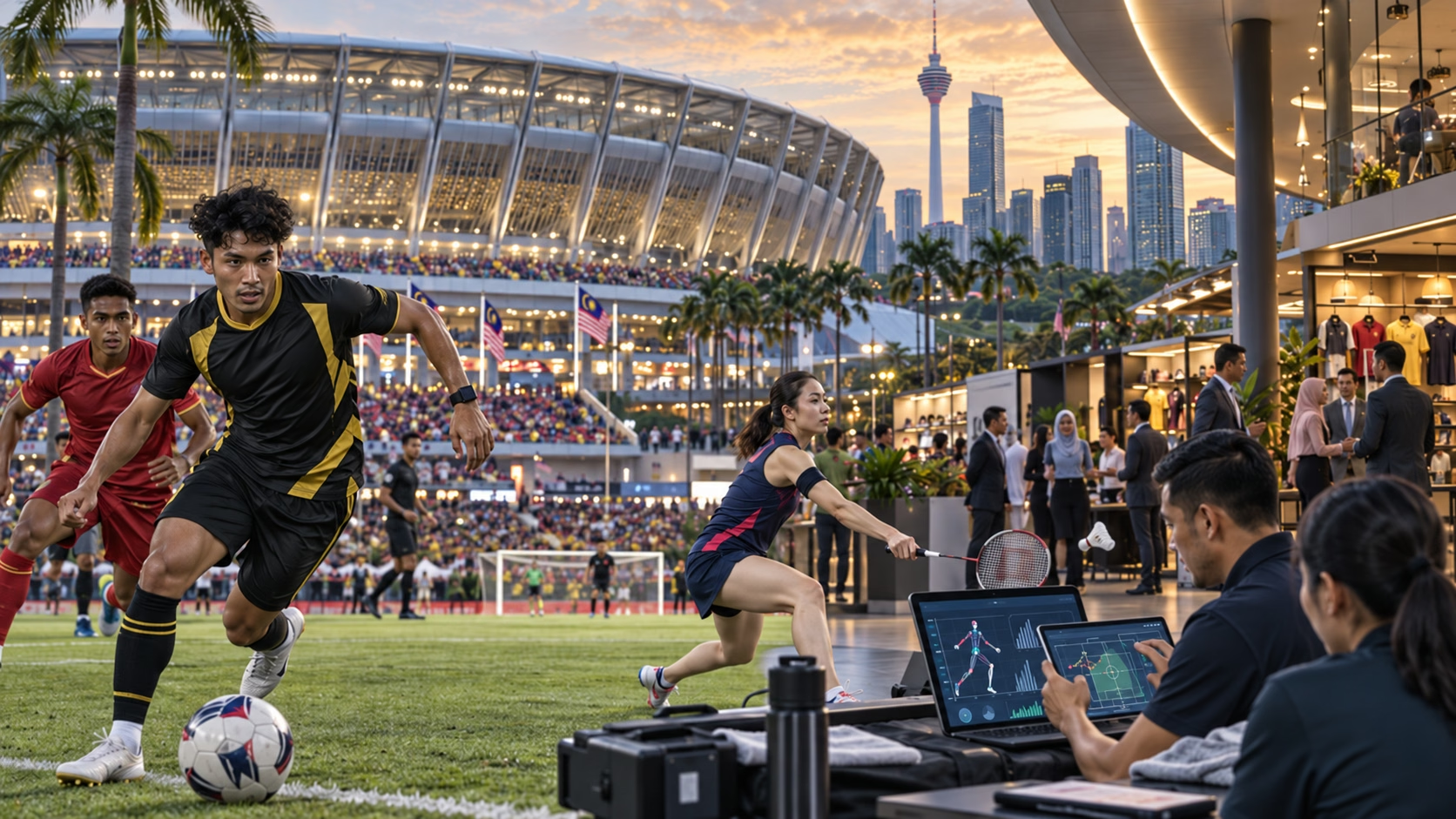
While fans celebrate the athletes, the real victory often happens behind closed doors in the labs, kitchens, and recovery centers. In 2026, Malaysia is positioning itself as a leader in sports medicine within the ASEAN region. The realization that technical skill is useless without physical durability has led to a massive budget reallocation towards sports science, sports nutrition, and psychological resilience.
The Gastrointestinal Fix for Football
One of the most tangible changes in Malaysian football has been nutritional. For years, local players were criticized for poor stamina and late-game fade-outs. Sports nutritionists discovered a heavy reliance on high-glycemic, fried foods in athletes’ diets. In 2026, clubs like Johor Darul Ta’zim (JDT) and Selangor FC now employ full-time dietitians who manage players’ meals, focusing on gut health and anti-inflammatory foods. The result is a faster, higher-tempo league where players are covering significantly more ground per match than in 2023.
The National Sports Medicine Centre
The government has greenlit the expansion of the National Sports Medicine Centre (NSMC) to include a state-of-the-art concussion research unit and a dedicated sports psychology wing. Mental health has finally been destigmatized in the locker room. Top athletes like diving queen Pandelela Rinong have been vocal advocates for psychological support, paving the way for younger athletes to seek help for performance anxiety without fear of losing their spot on the team.
Tropical Climate Adaptation
Malaysia’s heat and humidity are both a home advantage and a health risk. Sports scientists are utilizing “Heat Acclimation Protocols” where athletes train in climate chambers that simulate the exact temperature of upcoming overseas venues (like the cooler climates of Europe) to prevent shock. Conversely, visiting teams are offered cooling vests and misting technology data to prepare for Malaysian conditions. A comprehensive study on this topic, “Heat Stress and Athletic Performance in the Tropics,” was published by the Malaysian Sports Science Journal in early 2026 (https://www.mssj.com.my/), detailing new hydration biomarkers used by the national team.