
The 80-80-80 Goal: Decarbonising Buildings at Scale
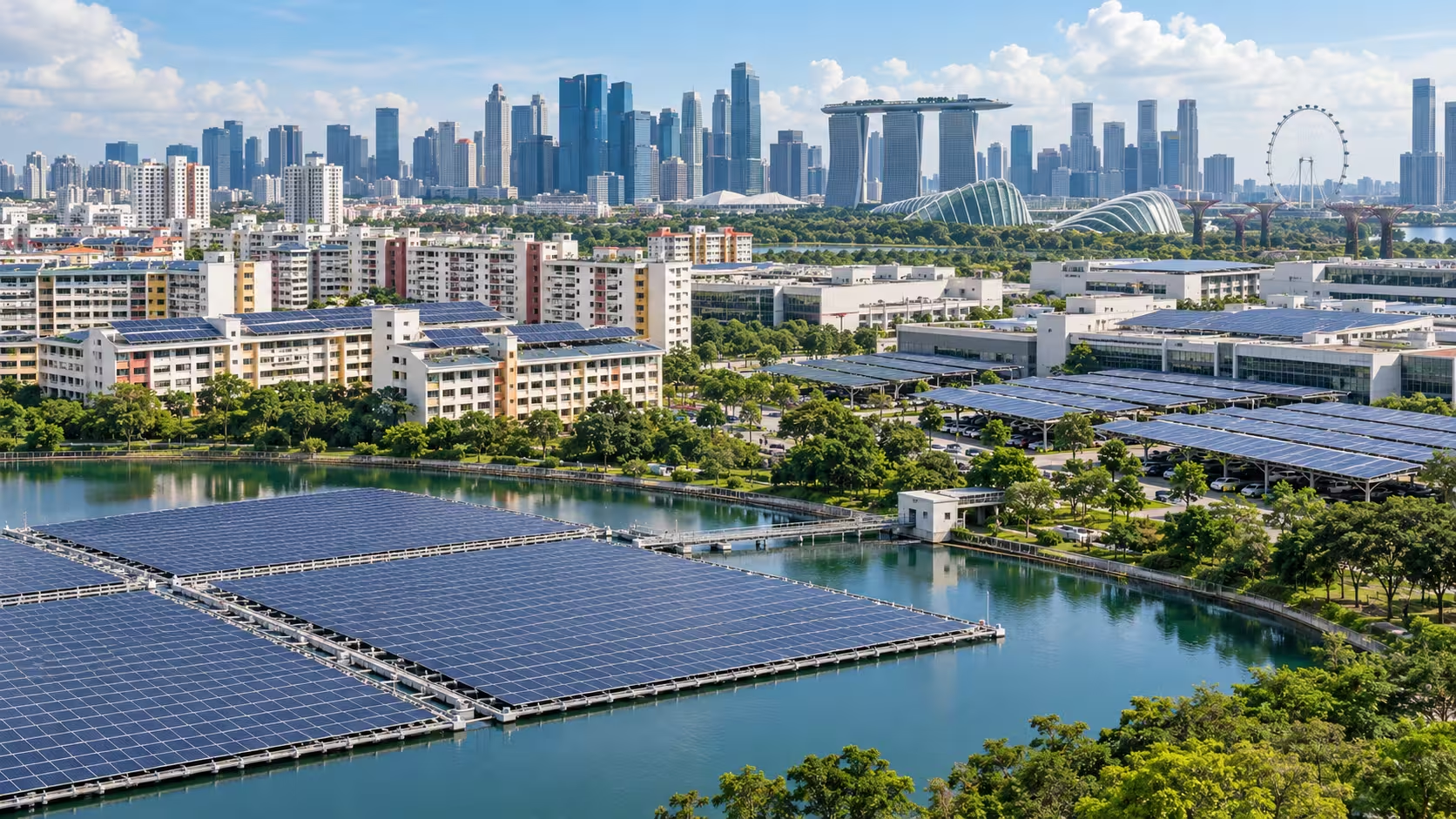
Singapore’s buildings consume energy long after construction ends. The Building and Construction Authority (BCA) and Singapore Green Building Council have developed a roadmap identifying close to 70 key technologies and strategies to reduce whole-life carbon emissions from buildings. The target: the “80-80-80” goals by 2030—80% of buildings green-rated, 80% improvement in energy efficiency for best-in-class buildings, and 80% of new developments to be super low energy.
Cool Paints and District Cooling
The Urban Redevelopment Authority (URA) is testing innovations in cool paints, district cooling, and climate simulations to keep Singapore liveable in a warming climate. Cool paint technology reflects solar radiation, reducing surface temperatures and lowering cooling loads. District cooling systems centralise chilled water production, achieving efficiency gains impossible with individual building chillers.
AI-Controlled Energy Optimisation
The built environment roadmap highlights AI-controlled energy optimisation systems as market-ready solutions. These systems continuously adjust cooling, lighting, and ventilation based on occupancy and external conditions. The 30 million SGD Built Environment AI Centre of Excellence, launched in partnership with SUTD, aims to develop AI solutions for construction productivity and climate resilience.
Punggol Eco-Town: A Living Laboratory
Punggol Eco-Town demonstrates sustainable urban planning at neighbourhood scale. LED lighting, elevator energy regenerative systems, rooftop solar, water conservation, rainwater harvesting, and recycling solutions are all test-bedded in a real community setting. The lessons learned feed back into national policy.
Key data point: BCA’s decarbonisation technology roadmap identifies close to 70 technologies to reduce whole-life carbon emissions from buildings. Source: BCA 2026.
Singapore’s approach is not about pilot projects that fade. It is about scaling proven technologies across public housing, commercial buildings, and industrial estates. The 40 million SGD USS Translation Fund helps local companies commercialise urban sustainability solutions. The city itself becomes the test bed—and the market.