
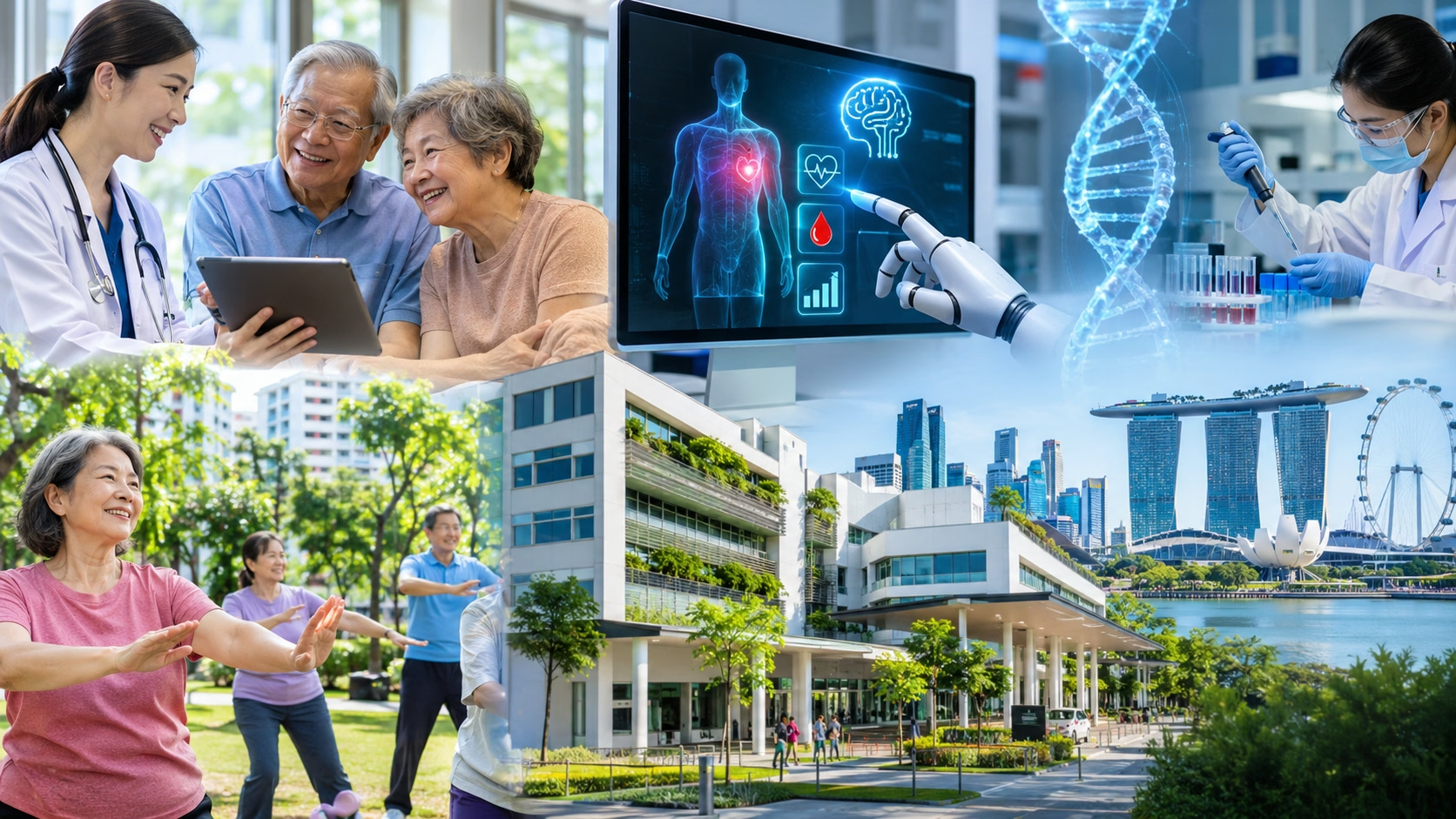
Singapore’s healthcare sector is undergoing a significant transformation in 2026 as the country accelerates its transition towards preventive medicine, artificial intelligence and integrated medical services. Rather than focusing exclusively on treating illnesses after symptoms appear, healthcare institutions are increasingly investing in technologies and programmes capable of identifying health risks earlier.
This transformation reflects the challenges of an ageing population, rising chronic disease prevalence and growing demand for personalised treatment. By combining advanced medical research with accessible community healthcare, Singapore is establishing a model that could influence healthcare development across Southeast Asia.
Preventive Healthcare Becomes a National Priority
One of the most important developments is the continued expansion of Healthier SG, a national initiative encouraging residents to establish long-term relationships with family doctors.
Through this programme, eligible individuals receive personalised health plans incorporating disease screening, vaccinations, lifestyle recommendations and chronic disease management. The initiative promotes continuous medical supervision rather than relying solely on occasional hospital consultations.
According to figures presented by Singapore’s Ministry of Health in October 2026, approximately 1.5 million residents had enrolled in Healthier SG by the end of August, representing 61% of the eligible population.
Participation in chronic disease screening also increased from 62.6% in 2023 to 71.5% in 2025, illustrating the country’s growing emphasis on early detection.
These developments indicate how primary healthcare providers are becoming central to Singapore’s long-term medical strategy.
Artificial Intelligence Strengthens Early Disease Detection
Artificial intelligence is emerging as another important component of Singapore’s healthcare modernisation.
In March 2026, the Ministry of Health announced plans to introduce the Assisted Chronic Disease Explanation using AI, known as ACE-AI.
Developed by Synapxe, the technology analyses medical information, including patient age and health history, to estimate the likelihood of developing diabetes or high cholesterol within three years.
Individuals classified as high risk have a predicted probability exceeding 75% of receiving either diagnosis during that period.
The system is scheduled for deployment from early 2027 across participating general practitioner clinics and polyclinics.
Patients identified as high risk may receive subsidised annual cardiovascular-risk screening instead of the standard three-year interval.
Further information is available through the Singapore Ministry of Health’s official 2026 healthcare announcement.
Genomic Research Advances Personalised Medical Treatment
Singapore is simultaneously strengthening its position in precision medicine through the National Precision Medicine programme.
Its third phase aims to recruit approximately 400,000 to 450,000 additional participants for whole-genome sequencing, building on genetic data previously collected from more than 100,000 residents.
The programme seeks to understand how genetic variations influence disease susceptibility, treatment responses and long-term health outcomes.
Such information could eventually support more individualised approaches to managing hereditary diseases, certain cancers and cardiovascular conditions.
However, researchers must demonstrate clinical effectiveness while maintaining strong safeguards for sensitive genetic information.
Community Healthcare Expands Beyond Traditional Hospitals
Modern healthcare development is also becoming increasingly visible in residential neighbourhoods.
Through Age Well SG, the government is introducing enhanced community healthcare services in Toa Payoh, Bedok, Bukit Panjang and Tiong Bahru-Redhill.
The four Age Well Neighbourhoods are expected to benefit more than 110,000 seniors through community health posts, home-based assistance, active-ageing programmes and improved accessibility.
These initiatives aim to reduce unnecessary hospital dependence while helping older residents maintain independence.
Singapore’s healthcare transformation demonstrates that the future of medical innovation involves more than sophisticated equipment. Its effectiveness will depend on combining advanced technology, medical expertise, accessible services and long-term patient relationships into a coordinated healthcare system.