
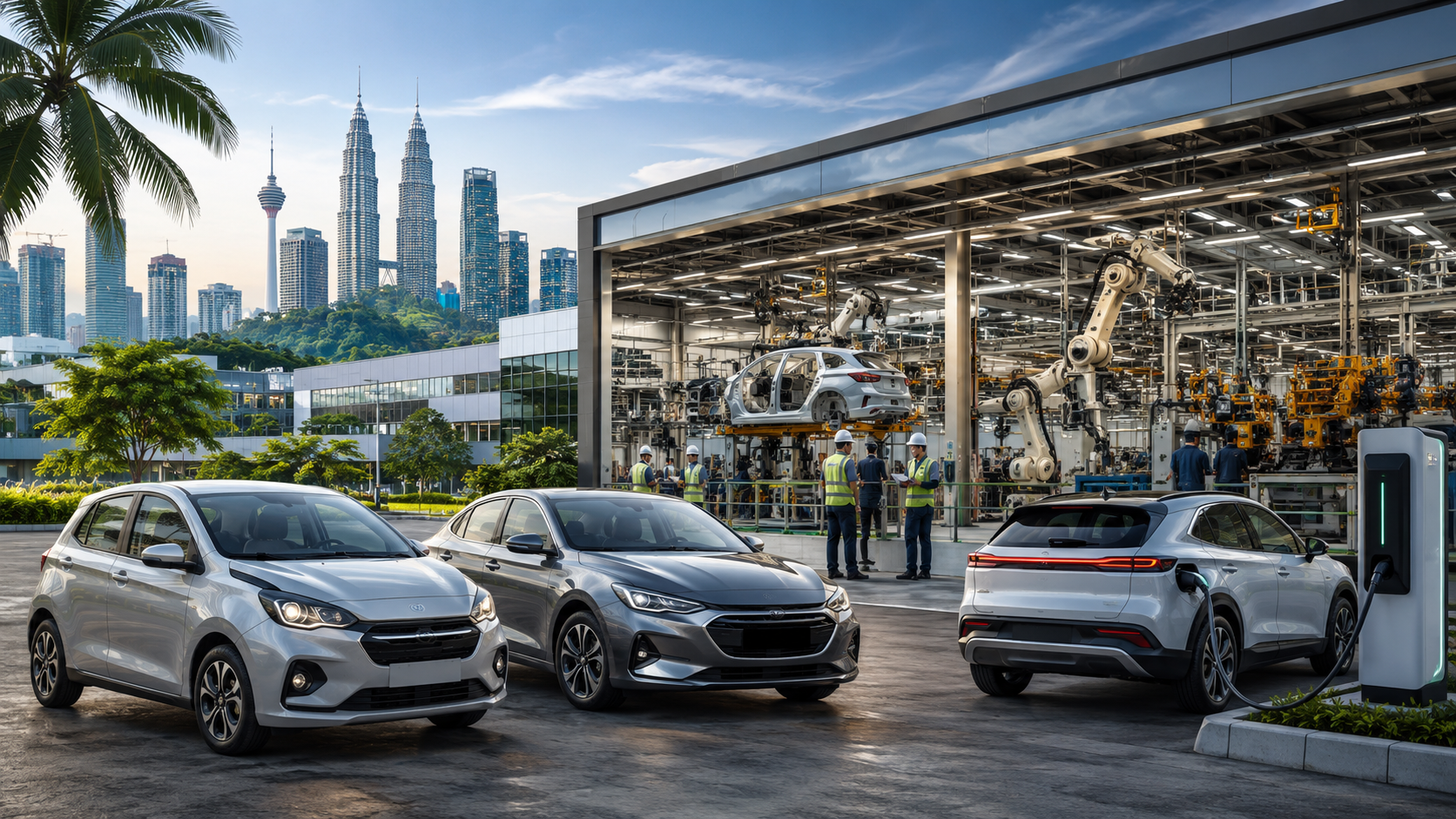
Malaysia’s automotive industry is moving beyond traditional vehicle manufacturing as technology becomes a major factor shaping the future of transportation. While previous generations of vehicles were primarily evaluated based on engine performance, durability, and fuel efficiency, modern vehicles are increasingly defined by software, connectivity, artificial intelligence, and digital ecosystems.
This transformation is changing how vehicles are designed, manufactured, and used. Malaysian automotive companies are gradually adopting smart mobility technologies to remain competitive in an industry where innovation is becoming as important as production capacity.
The development of connected vehicles, automated manufacturing systems, and advanced driver assistance technologies represents Malaysia’s ambition to become a more advanced automotive hub within Southeast Asia.
Malaysia’s digital industrial transformation strategy is supported through initiatives under the New Industrial Master Plan 2030 (NIMP 2030), which focuses on improving manufacturing competitiveness, technology adoption, and high-value industries. Official information is available through MITI Malaysia:
https://www.miti.gov.my/
The Rise of Connected Vehicles in Malaysia’s Automotive Market
Connected vehicle technology is becoming one of the most important developments in modern automotive innovation. Unlike traditional vehicles, connected cars can communicate with digital systems, smartphones, cloud platforms, and other infrastructure.
Modern vehicles increasingly include features such as:
- Real-time navigation systems
- Remote vehicle monitoring
- Smartphone integration
- Over-the-air software updates
- Digital vehicle diagnostics
- Cloud-based services
These technologies improve convenience, safety, and the overall ownership experience.
For Malaysian consumers, connected vehicle features are becoming increasingly attractive, especially among younger drivers who are familiar with digital platforms and expect similar technology integration in their vehicles.
Automotive companies are responding by introducing vehicles equipped with larger digital displays, advanced infotainment systems, and intelligent driving assistance features.
Advanced Driver Assistance Systems and Safer Mobility
Safety technology has become a major competitive factor in Malaysia’s automotive market.
Advanced Driver Assistance Systems (ADAS) are increasingly included in modern vehicles, providing features designed to reduce accidents and improve driving confidence.
Common ADAS technologies include:
- Autonomous emergency braking
- Lane departure warning
- Adaptive cruise control
- Blind spot monitoring
- Intelligent parking assistance
Previously, these features were mostly available in premium vehicles. However, competition among manufacturers has encouraged wider adoption across more affordable vehicle segments.
Local manufacturers such as Proton and Perodua have incorporated advanced safety systems into selected models, allowing more Malaysian consumers to access modern automotive protection technologies.
The expansion of ADAS reflects a broader industry shift where vehicle safety is becoming a standard expectation rather than a luxury feature.
Industry 4.0: Transforming Malaysia’s Automotive Manufacturing Process
The modernization of Malaysia’s automotive industry is not only happening in vehicles but also inside manufacturing facilities.
Industry 4.0 technologies are changing how vehicles are produced through:
- Industrial robotics
- Artificial intelligence quality inspection
- Automated production systems
- Digital manufacturing monitoring
- Data-driven decision-making
These technologies allow manufacturers to improve efficiency, reduce production errors, and compete with advanced automotive manufacturing centers in countries such as Thailand, China, Japan, and South Korea.
For Malaysia, adopting smart manufacturing is essential because the global automotive industry is becoming increasingly technology-intensive.
Manufacturers that successfully integrate automation and digital systems will have greater opportunities to attract investment and participate in future automotive supply chains.
Artificial Intelligence and the Future of Autonomous Mobility
Artificial intelligence is becoming a key technology in the future development of transportation.
AI systems allow vehicles to process information from cameras, sensors, and digital platforms to improve safety and driving performance.
Although fully autonomous vehicles are still developing globally, Malaysia has opportunities to participate in autonomous mobility research through smart city projects, technology partnerships, and transportation innovation programs.
Potential future applications include:
- Autonomous public transportation
- Intelligent traffic management
- AI-powered vehicle assistance
- Smart logistics systems
The adoption of AI-based mobility solutions could help Malaysia address urban challenges such as traffic congestion and transportation efficiency.
Challenges in Building Malaysia’s Future Smart Mobility Ecosystem
Despite technological progress, Malaysia faces several challenges in developing a fully connected automotive ecosystem.
The first challenge is infrastructure readiness. Smart vehicles require reliable digital networks, charging systems, and intelligent transportation infrastructure.
Another challenge is developing local technology expertise. Future automotive competitiveness depends not only on mechanical engineering but also on software development, cybersecurity, artificial intelligence, and data management.
Malaysia must continue investing in education, research, and technology partnerships to create a workforce capable of supporting next-generation mobility.
Malaysia’s Path Toward a Digital Automotive Future
The future of Malaysia’s automotive industry will depend on the successful combination of manufacturing experience and technological innovation.
Connected vehicles, artificial intelligence, and Industry 4.0 systems are transforming cars from simple transportation tools into intelligent mobility platforms.
As global automotive competition becomes increasingly focused on digital capabilities, Malaysia’s ability to embrace smart vehicle technology will determine its position in the future ASEAN automotive landscape.