
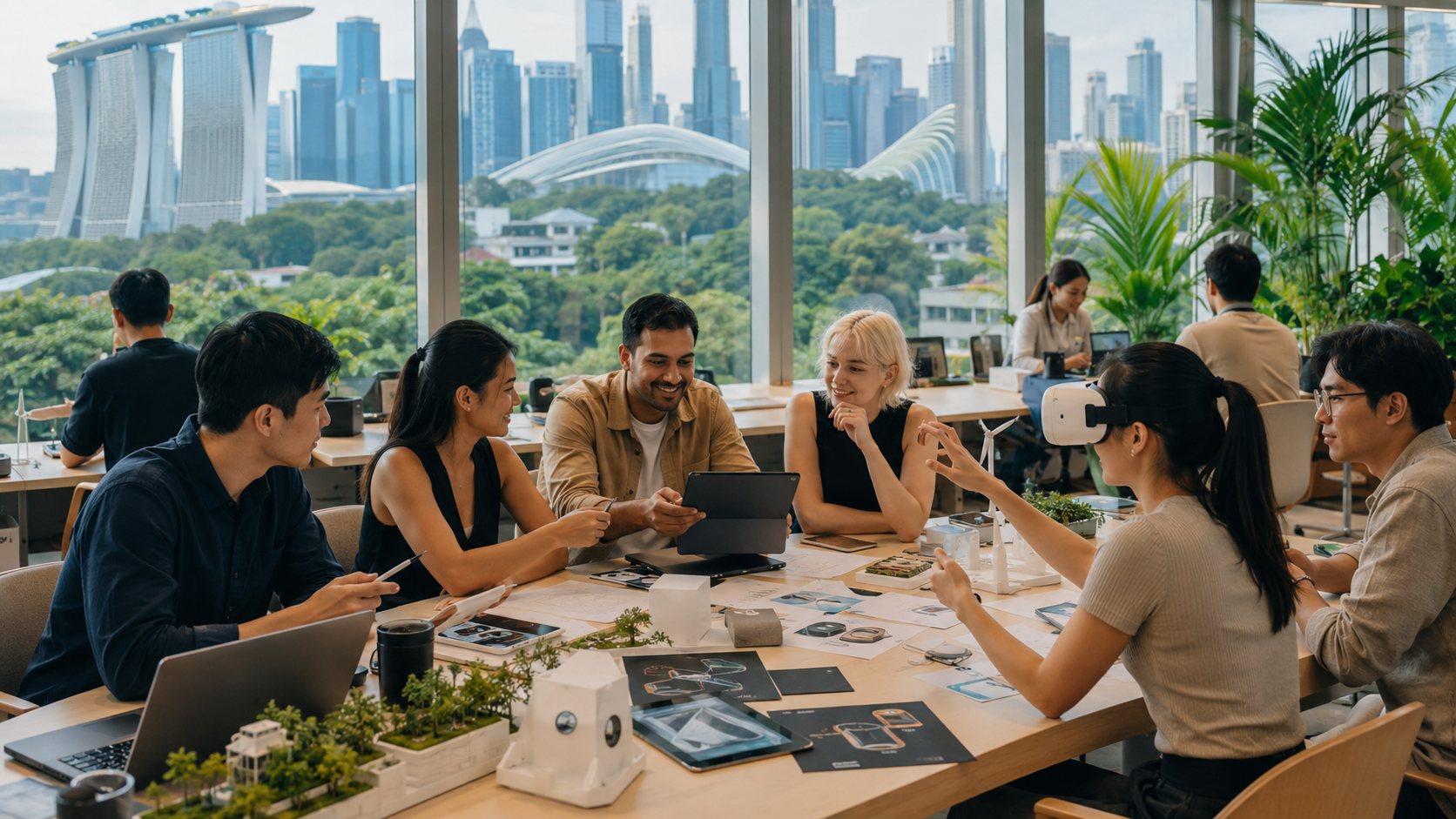
Every global brand was once a local experiment. In Singapore, the distance between those two points has been systematically shortened. The city‑state has constructed an ecosystem where a creative business—whether it produces augmented‑reality concerts or sustainable fashion marketplaces—can assemble the ingredients for international scaling without ever leaving the island. The 2026 landscape shows that this model is not theoretical; it is producing a new generation of born‑global companies.
Infrastructure Built for Digital First Distribution
Singapore’s nationwide fiber network and impending 6G rollout make it one of the most connected places on earth. For creative startups, this means heavy media files, live‑streamed events, and interactive cloud applications can be delivered with near‑zero latency. The Google‑Temasek‑Bain e‑Conomy SEA Report 2026 highlights Singapore as the digital distribution nucleus for the region, noting that creative digital services originating from the city‑state are the fastest‑growing export category. This backbone allows a small team to serve audiences in Europe or the Americas with the same seamlessness as a Silicon Valley giant.
Multicultural Fluency as a Competitive Moat
Singapore’s demographic fabric—Chinese, Malay, Indian, and Eurasian communities living side by side—gives creative startups an innate understanding of cultural nuance. A brand narrative tested in the multicultural neighborhoods of Tiong Bahru or Kampong Glam is already battle‑tested for diversity. Founders often launch products simultaneously in English and Mandarin, with user interfaces adaptable to right‑to‑left scripts, because the local talent pool can handle those requirements without outsourcing. This embedded cultural intelligence reduces embarrassing market‑entry blunders and significantly accelerates user adoption across Asia and the Middle East.
Funding Vehicles That Match the Creative Lifecycle
Unlike hardware or biotech startups, creative ventures often face irregular revenue patterns tied to content cycles and seasonal demand. Singapore’s funding architecture acknowledges this. The government’s Enterprise Financing Scheme, along with private revenue‑based financing platforms, provides non‑dilutive capital that aligns with project‑based cash flows. Meanwhile, innovation grants like the Open Innovation Platform connect creative startups with enterprise challenges, delivering both paid pilots and long‑term procurement contracts that serve as international reference clients.
Real‑World Springboards Hidden in Plain Sight
Physical assets also play a role. Singapore’s state‑of‑the‑art studios at Mediapolis and the immersive tech labs at PIXEL are accessible at subsidized rates, giving creative startups the production value of big studios without the overhead. When an edutainment startup wants to record a multi‑camera AR session with a Hollywood‑level green screen, it can do so locally and stream the result to learners across 15 countries. This closes the quality gap that once prevented small creative firms from competing on a global stage.
The Network Effect of a Compact Ecosystem
In a city that takes under an hour to traverse, serendipitous encounters between founders, investors, corporate innovation heads, and government policy designers are routine. Events at the LaunchPad one‑north cluster or the annual Singapore FinTech Festival (which increasingly features creative‑tech tracks) compress what would elsewhere take six months of cold outreach into a single afternoon. That network density is a force multiplier; once a creative startup locks in a partnership with a regional telecom or a luxury hotel group, the endorsement cascades across Southeast Asia’s business community, unlocking doors in markets that are notoriously difficult to penetrate.
Singapore has made the process of turning a local creative idea into a global brand feel almost methodical. The result is a generation of founders who view the planet as their addressable market from day one.