
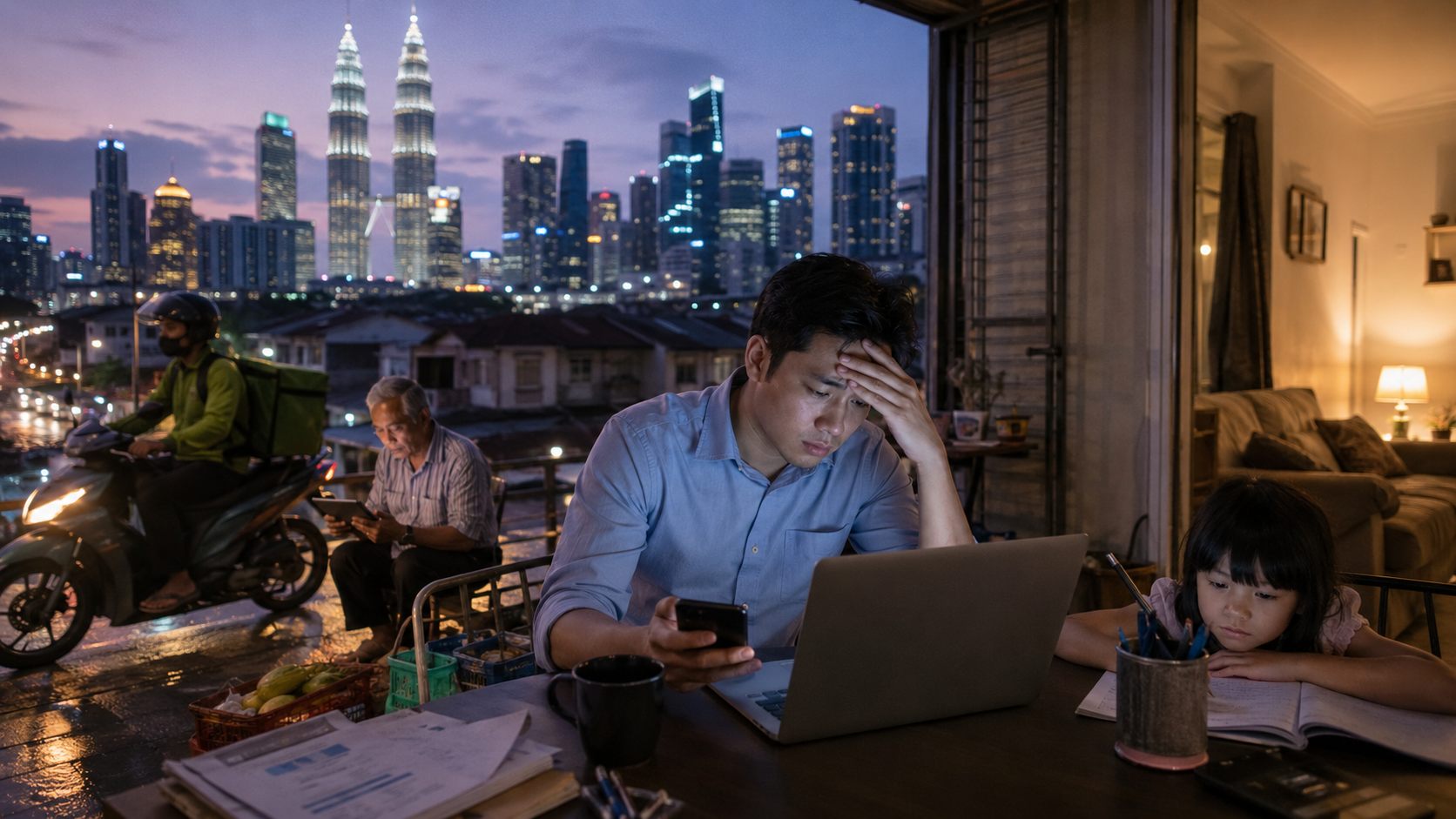
Community in Transition
Malaysia’s social transformation is not only happening in shopping malls, airports, universities, and digital platforms. It is also happening in the changing relationship between kampung life, suburbs, and expanding cities. Globalisation has pulled people, money, ideas, and technology across borders, but it has also pulled Malaysians from rural areas into urban economies.
The World Bank’s Malaysia data portal provides long-term indicators on development, population, and economic change, offering useful context for understanding how national growth is linked to urbanisation and social mobility.
The Pull of the City
Jobs, Education, and Mobility
For decades, cities such as Kuala Lumpur, Johor Bahru, Penang, Kota Kinabalu, and Kuching have attracted Malaysians seeking education, employment, healthcare, and modern lifestyles. Globalisation has intensified this movement by concentrating high-value jobs in finance, technology, logistics, tourism, manufacturing, and professional services.
Young people often leave hometowns not because they reject their roots, but because opportunity is unevenly distributed. Universities, multinational firms, creative industries, and digital infrastructure are more accessible in urban areas. This creates a new social pattern: families may remain emotionally tied to the kampung while economically dependent on the city.
The Changing Kampung
Globalisation does not make rural communities disappear. It changes how they function. Many kampung households now depend on remittances from family members working in cities or overseas. Rural entrepreneurs use social media to sell food, crafts, homestays, agricultural products, or tourism experiences.
At the same time, rural areas face challenges. Ageing populations, limited job options, slower internet in some locations, and migration of young adults can weaken local institutions. Schools, mosques, temples, churches, and community halls remain important, but participation patterns are changing.
Smart Cities and Social Distance
Malaysia’s push toward smart cities promises efficiency: digital payments, connected transport, surveillance systems, green buildings, and app-based municipal services. These innovations can improve daily life, reduce congestion, and make public services easier to access.
However, smart-city development can also create social distance. High-rise living may reduce neighbourly interaction. Gated communities can separate income groups. Expensive urban housing pushes younger families farther from city centres, increasing commute times and reducing family time.
Migrant Labour and Global Dependence
The Hidden Workforce
Malaysia’s urban growth is also connected to migrant labour. Construction, plantations, domestic work, manufacturing, and services rely heavily on workers from neighbouring countries. This is a real and current social issue because globalisation brings not only investment and goods, but also people whose labour supports everyday comfort.
Many Malaysians encounter migrant workers daily without fully recognising their role in national development. Ethical treatment, fair wages, housing standards, and social integration remain important questions for a globalised Malaysia.
Identity Between Two Worlds
A common Malaysian experience today is living between multiple places. Someone may work in Kuala Lumpur, support parents in Kedah, invest in a house in Selangor, and return to the hometown during Hari Raya, Chinese New Year, Deepavali, Gawai, or Kaamatan. This circular movement keeps community ties alive while reshaping them.
The meaning of “home” becomes layered. It can mean the birthplace, the city apartment, the family WhatsApp group, or the neighbourhood where children attend school.
The Future of Malaysian Community
Globalisation has made Malaysian communities more mobile, connected, and economically complex. The challenge is to ensure development does not weaken social trust. A strong Malaysia will need both smart infrastructure and human connection: efficient cities, viable rural economies, fair treatment of workers, and cultural spaces where people still recognise one another as neighbours.