
The Seven-Million-Dollar Problem
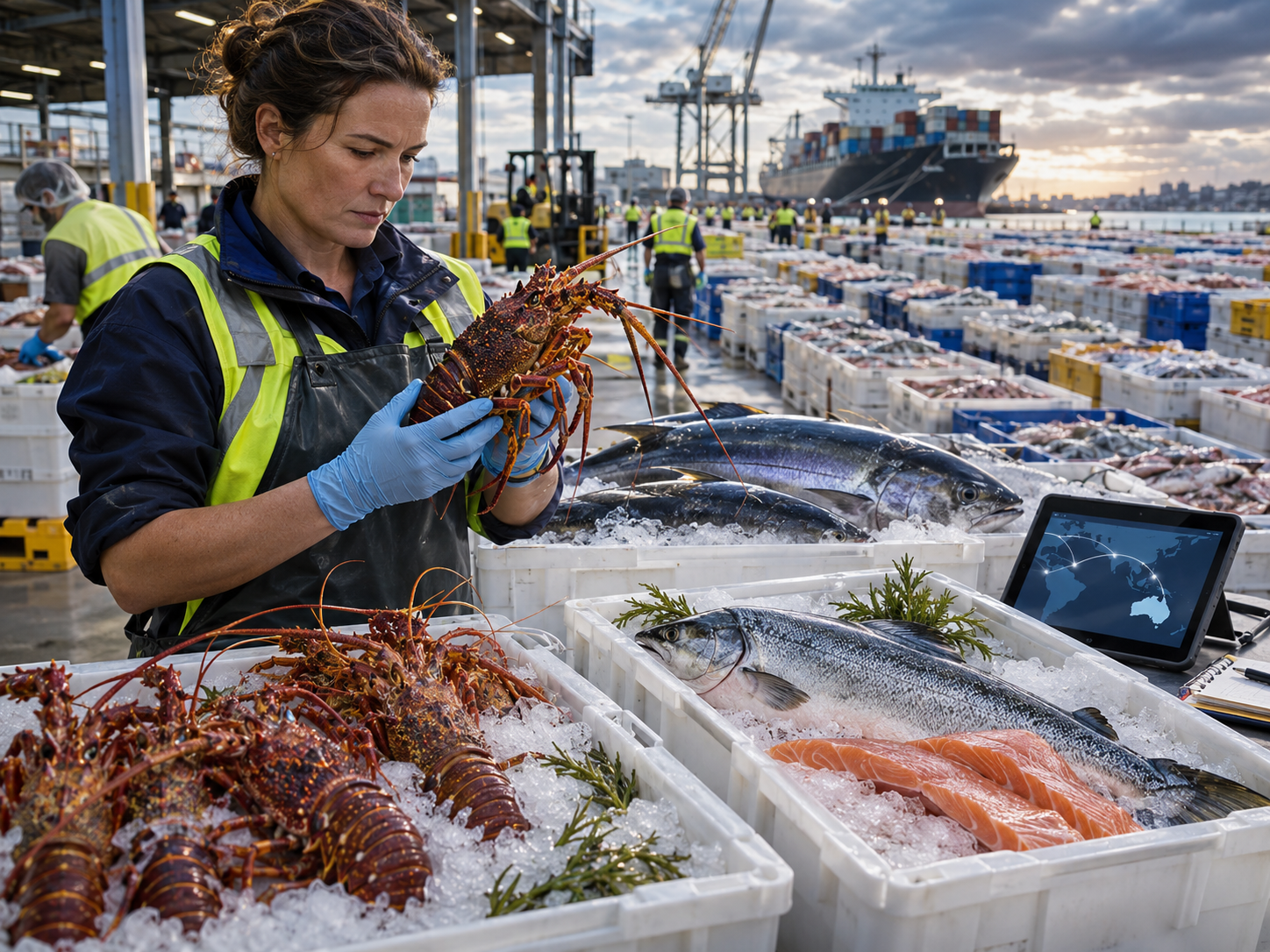
Of the roughly $1.5 billion in seafood Australia exports annually, only about $7 million has been reaching Europe. That figure is not a reflection of demand or quality. It is a tariff problem. Australian rock lobster has faced a 23% tariff entering the EU, a barrier that made premium Australian product uncompetitive against suppliers from within Europe and from countries with preferential access .
The Australia-EU Free Trade Agreement, concluded after eight years of negotiation, changes that arithmetic from day one. All Australian seafood products enter the EU tariff-free upon implementation. For a sector that has been structurally locked out of a market of 450 million consumers and a $33 trillion economy, the shift is not incremental. It is a reopening of a channel that had been narrowing for years .
What the Industry Is Saying
Seafood Industry Australia has been explicit about the significance. Kyri Toumazos, representing the peak body, described Europe as a market that was historically strong for Australian seafood but had contracted as tariffs accumulated. The new agreement, in his framing, offers not just recovery but diversification—a second major export pillar alongside Asia .
That diversification matters because Australia’s seafood trade has been heavily concentrated. China’s demand for rock lobster has driven enormous value, but the experience of recent years demonstrated how quickly a single-market dependency can become a vulnerability. Europe does not replace China. But it provides an alternative destination for premium product when the primary market tightens.
The Political Friction Beneath the Trade Win
The agreement is not yet fully secure. The National Party has signaled opposition, and the trade minister has publicly called on the Liberal Party to back the deal on national interest grounds. The argument from the government is straightforward: the agreement is worth $10 billion from the start, rising toward $30 billion, and Australia gets one opportunity to lock in these terms .
For seafood producers, the politics are secondary to the logistics. Cold chain capacity, freight routes to European ports, and buyer relationships in Rome, Paris, Berlin, and Madrid all need to be rebuilt after years of tariff-driven absence. The tariff removal is the starting gun, not the finish line.