
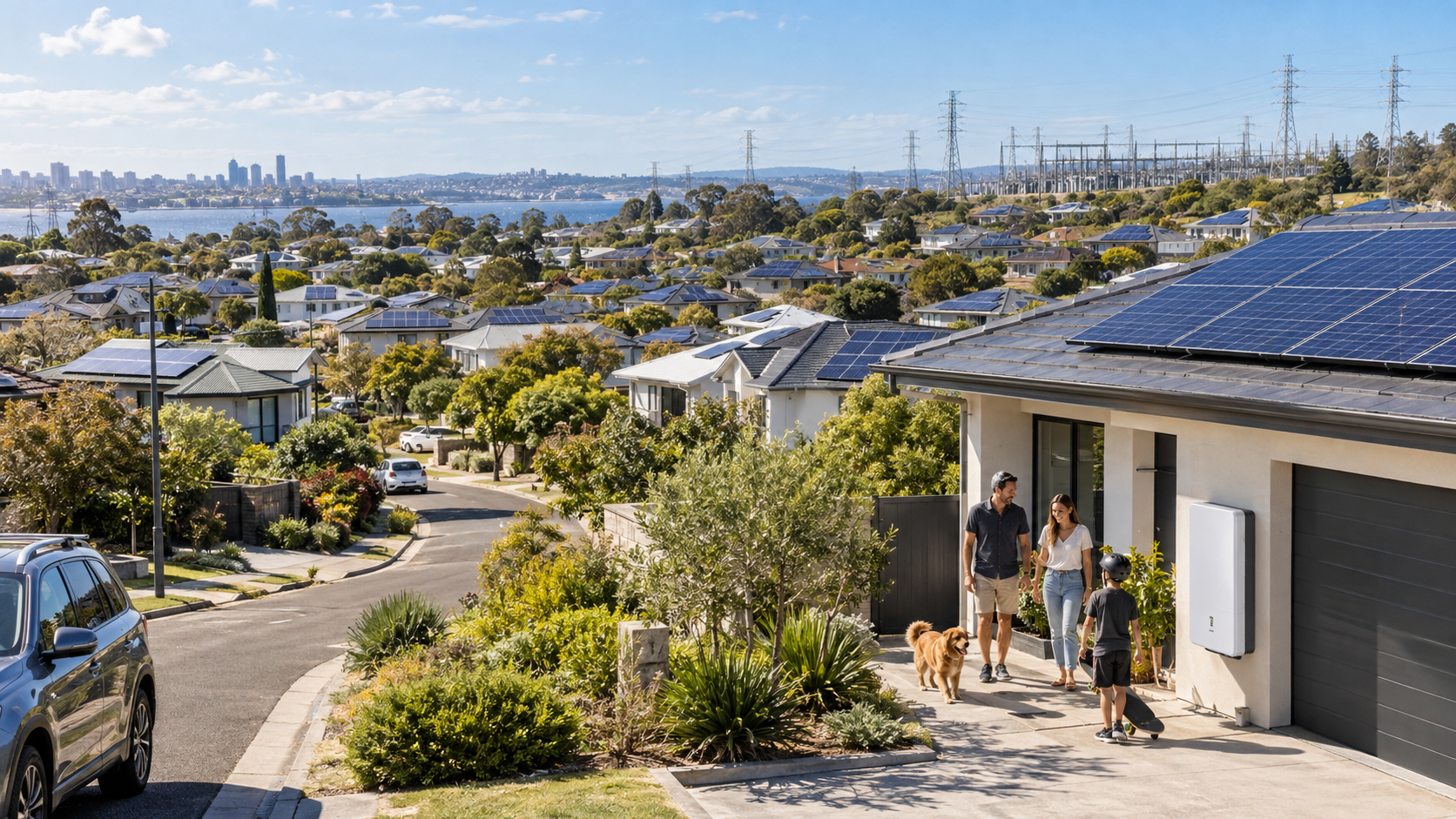
While rooftop solar and home batteries capture public attention, a quieter but equally transformative revolution is unfolding at grid scale. Australia’s large-scale battery storage capacity has more than doubled over the past year, exceeding 9 gigawatts of installed capacity as of mid-2026. This growth represents one of the fastest battery deployment rates in the world. The numbers are extraordinary by any measure. In the second quarter of 2026 alone, 1,975 megawatts and 5,560 megawatt-hours of new battery energy storage capacity came online across seven projects, bringing the National Electricity Market’s operational battery fleet to 7,682 megawatts and 17,675 megawatt-hours. These are not pilot projects or demonstration facilities—they are commercial-scale assets providing essential grid services. The Australian Energy Market Operator’s latest data, accessible at https://aemo.com.au/, tracks this rapid deployment.
The Australian Government’s Capacity Investment Scheme has emerged as the primary catalyst for grid-scale battery deployment. Through Tender 8 of the scheme, 15 successful energy storage projects with a combined capacity of 4.2 gigawatts and 16.1 gigawatt-hours will be built across New South Wales, Queensland, Victoria, and South Australia. These projects will provide enough clean dispatchable capacity to power 3.7 million Australian households, a figure that underscores the scale of the transformation underway. The Capacity Investment Scheme functions as a revenue underwriting mechanism, reducing the financial risk for developers and accelerating the pace of deployment.
The investment figures tell a story of remarkable momentum. Utility-scale solar investments reached 3 billion Australian dollars in the first half of 2026, representing a year-on-year increase of 305 percent. While battery storage is often co-located with solar farms, standalone battery projects are also proliferating. The Clean Energy Finance Corporation committed a record 9.1 billion Australian dollars in the financial year to June 2026, helping drive 19.6 billion dollars in total transaction value and bringing its lifetime clean energy project value to over 105 billion Australian dollars. This government-backed financing has been instrumental in de-risking early-stage battery projects and attracting private capital. Falling battery costs have been a critical enabler. The Clean Energy Regulator identified “rapidly falling battery storage costs” as a major catalyst for the record growth in both household and grid-scale battery installations. As lithium-ion battery prices continue to decline and new chemistries emerge, the economics of energy storage become increasingly compelling.
The operational impact of grid-scale batteries is becoming increasingly visible in Australia’s energy markets. Batteries are fundamentally changing how electricity is dispatched, stored, and priced. They absorb excess solar generation during the day and discharge it during evening peak demand periods, reducing reliance on gas peakers and improving grid reliability. The Australian Energy Market Operator has documented how batteries are “re-shaping energy markets,” with renewable generation accounting for a record 42.1 percent of National Electricity Market generation in the second quarter of 2026. This growth was driven by strong year-on-year output increases in wind (up 20 percent), grid-scale solar (up 12 percent), and rooftop solar (up 6.9 percent).
Major battery projects are pushing the boundaries of what energy storage can achieve. Quinbrook’s Supernode battery energy storage project in Queensland has completed Stage 2 commercial operation and reached financial close on 469 million Australian dollars for Stage 3, with planned capacity expected to exceed 3 gigawatt-hours across its first three stages. Neoen Australia’s total storage capacity has reached 2.7 gigawatts and 9.1 gigawatt-hours in operation or under construction, cementing its position as the country’s leading battery owner and operator. The trajectory of battery deployment in Australia shows no signs of slowing. The Capacity Investment Scheme is expected to support an additional 26 gigawatts of solar and wind generation backed by 14 gigawatts of new clean energy storage. Long-duration storage tenders, including pumped hydro and emerging technologies, are also being pursued to complement the growing fleet of lithium-ion batteries. The challenge now is not whether batteries will play a central role in Australia’s energy future—that question has been answered. The challenge is ensuring that the regulatory framework, grid infrastructure, and supply chains can keep pace with the extraordinary rate of deployment. If the first half of 2026 is any indication, Australia’s battery boom is only just beginning.