
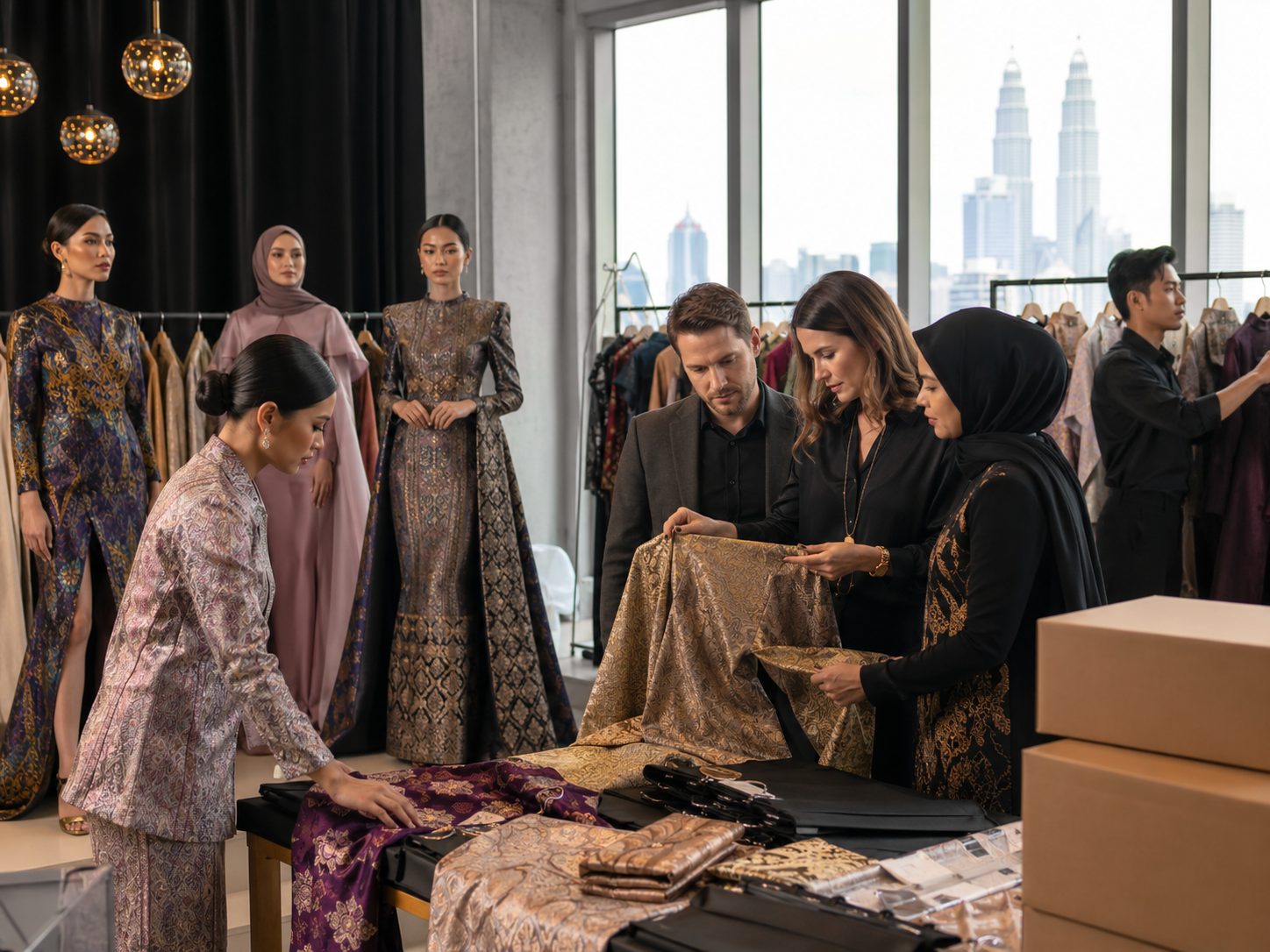
Malaysia’s apparel sector is undergoing a quiet but powerful transformation. Designers who once catered only to local weddings and festive seasons are now fulfilling orders from Riyadh, London, and Singapore. The shift is supported by a mix of government incentives, e-commerce infrastructure, and a global appetite for modest fashion that shows no signs of slowing.
The New Malaysian Design Identity
Contemporary Malaysian fashion is defined by a fusion of traditional textiles and modern tailoring. Alia Bastamam’s minimalist ready-to-wear often includes handwoven songket panels, giving her pieces a subtle local signature. Rizman Ruzaini’s couture uses intricate beadwork and local fabric motifs to appeal to Middle Eastern clientele. Khoon Hooi and Jovian Mandagie similarly balance cultural heritage with international silhouettes. This hybrid approach makes Malaysian brands memorable in a crowded global marketplace.
Brands Expanding Beyond Domestic Borders
Fiziwoo has secured retail placements in the Middle East, while Innai Red and Nurita Harith export modest bridal wear to Singapore, Brunei, and Indonesia. Mimpikita’s collections are available through multiple regional online platforms. According to MIDA’s fashion and textile overview, Malaysian fashion companies are moving toward design-driven exports, sustainable sourcing, and regional brand building. The official sector overview is available here: https://www.mida.gov.my/. This strategic shift aligns with Malaysia’s broader goal of moving up the apparel value chain.
E-Commerce as an Export Accelerator
Digital platforms have dramatically lowered the cost of going global. Zalora, Shopee, and TikTok Shop allow a Kuala Lumpur designer to reach customers in Jeddah or Amsterdam without opening a single physical store. This direct-to-consumer model also provides valuable data on sizing, preferences, and pricing across regions. FashionValet’s rise and subsequent 2024 restructuring—when Khazanah and PNB divested at a loss—highlighted both the promise and the pitfalls of local fashion e-commerce. The lesson has been absorbed: sustainable growth now matters more than rapid market capture.
Modest Fashion Demand and Regional Advantage
The global modest fashion market is estimated to exceed US$300 billion per year, and Malaysia’s halal-certified ecosystem gives its brands a credibility edge. Local designers are increasingly visible at Dubai Modest Fashion Week, Jakarta Fashion Week, and London Modest Fashion Week. These appearances generate wholesale leads, editorial coverage, and celebrity endorsements that translate into repeat international orders. Malaysia’s multicultural design language—drawing from Malay, Chinese, Indian, and indigenous traditions—also broadens its appeal beyond strictly modest consumers.
Scaling Challenges and Strategic Responses
High fabric costs, limited local manufacturing capacity, and intellectual property theft remain major obstacles. Many designers must import premium textiles, which increases lead times and reduces margins. Industry associations are advocating for regional fabric sourcing hubs, faster IP registration, and specialized export financing. Some brands are also adopting made-to-order models to avoid overproduction and protect design integrity. These adjustments are helping Malaysian labels build resilient, export-ready businesses.