
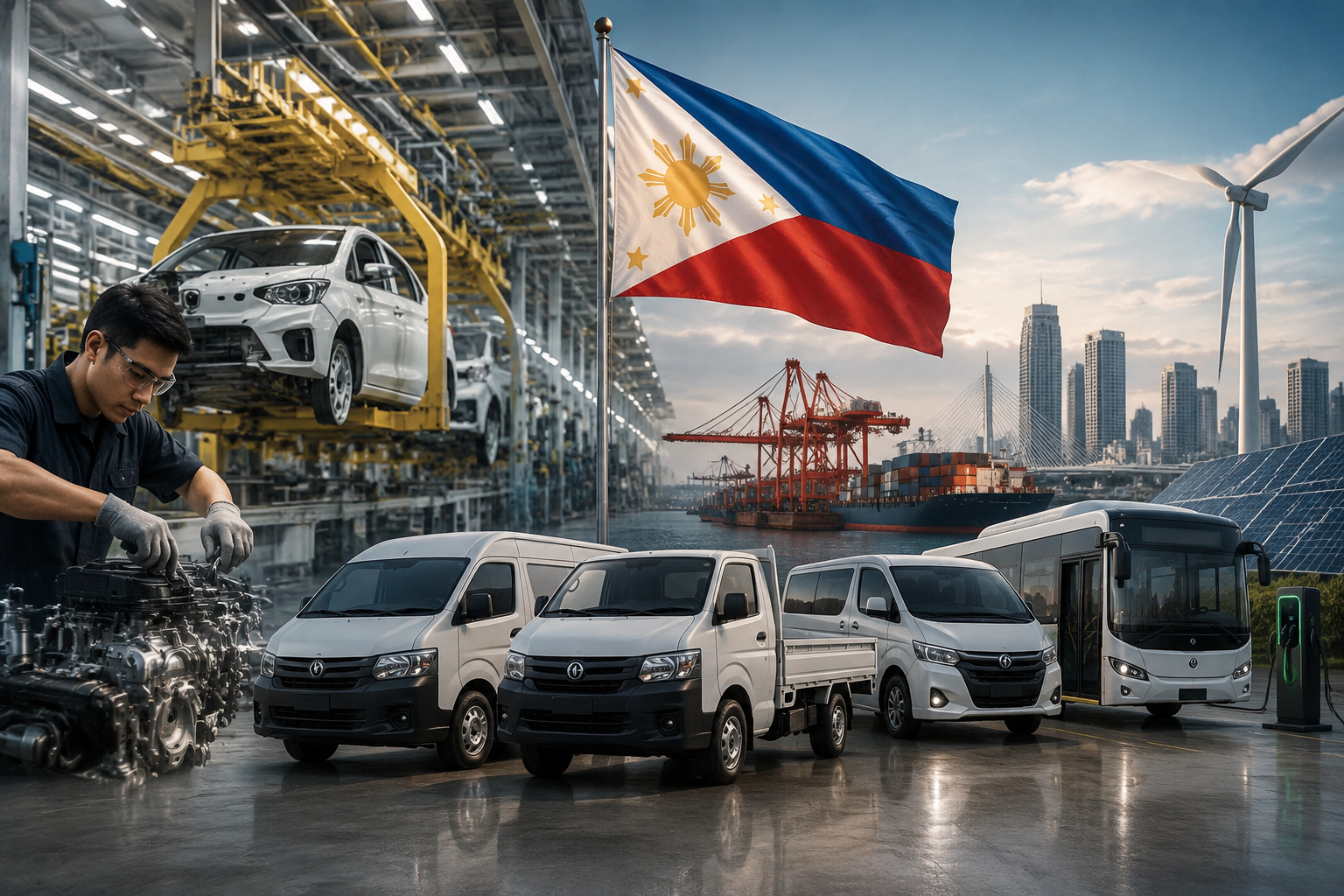
Public discussions about the Philippine automotive industry often focus on the number of cars assembled locally. That figure is important, but it does not fully measure the industry’s economic contribution.
A competitive automotive sector also depends on companies producing transmissions, wiring harnesses, seats, metal stampings, dashboards, tires, plastic components, batteries, software, and electronic control systems. These suppliers create skilled employment and allow more of a vehicle’s value to remain inside the domestic economy.
Manufacturing indicators published by the Philippine Statistics Authority provide a broader view of industrial activity, including the performance of transport equipment and related manufacturing categories.
The future of local vehicle production will therefore depend on whether the Philippines can expand from assembly into higher-value components and engineering services.
Electronics Expertise Creates an Important Advantage
The Philippines already participates in global electronics and semiconductor supply chains. This experience is increasingly relevant because modern vehicles contain more sensors, processors, cameras, control modules, and communication systems than earlier generations.
Hybrid and battery-electric vehicles require additional electronic content, including inverters, battery-management systems, power-control units, onboard chargers, and thermal-management components.
Connecting the country’s electronics sector with automotive production could create a specialized industrial advantage. Instead of attempting to manufacture every component domestically, the Philippines could focus on areas where existing technical knowledge and export infrastructure are strongest.
Automotive-grade production, however, requires extremely strict quality standards. Components must withstand heat, vibration, moisture, and years of continuous use. Suppliers need testing laboratories, traceability systems, cybersecurity capabilities, and internationally recognized certifications.
Local Content Must Become More Sophisticated
Basic components remain important, but the greatest long-term value lies in engineering-intensive products. A supplier producing a simple plastic trim piece faces strong price competition. A company designing power electronics, vehicle software, or specialized safety systems can generate higher margins and more durable customer relationships.
Local-content policy should therefore measure technological depth, not only the number of domestically sourced parts.
Government incentives can encourage manufacturers to select local suppliers, but smaller companies also need access to financing and production equipment. Automotive contracts frequently require expensive tooling before a supplier receives regular orders. Without affordable capital, capable domestic firms may be unable to participate.
Workforce Development Must Follow New Vehicle Technology
Electric and software-defined vehicles will change the skills required across the industry. Assembly workers, mechanics, emergency responders, and dealership technicians must understand high-voltage systems and battery safety.
Universities and technical institutions can support this transition through programs in mechatronics, electronics, embedded software, robotics, and data analysis. Training should be designed with manufacturers so that graduates possess skills that factories and service centers actually require.
Regional Exports Could Support Production Scale
The domestic market alone may not provide enough volume for every component manufacturer. Exporting parts to factories in Thailand, Indonesia, Malaysia, Japan, or other regional markets could help Philippine suppliers achieve more efficient production levels.
This strategy requires reliable ports, competitive electricity costs, consistent customs procedures, and compliance with regional technical standards. Delays can disrupt vehicle factories operating under tightly scheduled production systems.
The strongest future for the Philippine automotive industry lies in combining local assembly with electronics expertise, specialized parts, and skilled labor. Building more vehicles is valuable, but building the technology inside those vehicles would create a deeper and more resilient industrial base.