
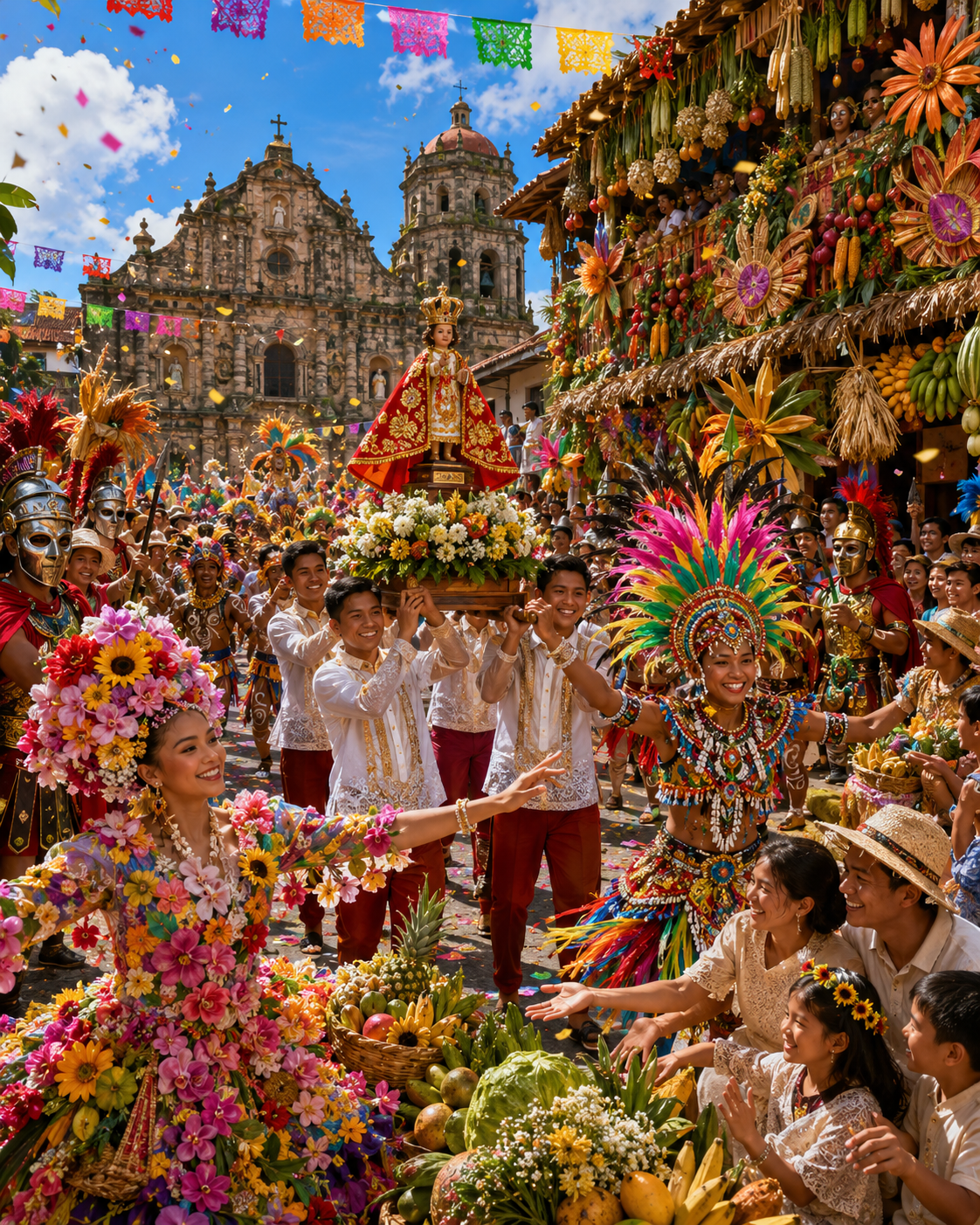
The Philippines has one of the most festive cultural traditions in Asia. Throughout the year, different towns and cities celebrate events that highlight religion, history, harvest, local legends, and community identity. These festivals are known for their bright costumes, street dances, music, food, and warm public participation. More importantly, they reveal the values that shape Filipino life: faith, gratitude, family, resilience, creativity, and togetherness.
A large number of Philippine festivals are connected to Catholic devotion. This reflects the historical influence of Spain, which ruled the country for more than three centuries. However, Filipino communities did not simply copy foreign traditions. They blended Catholic practices with local customs, music, dance, and indigenous symbols. Sinulog Festival in Cebu is a famous example. It honors the Santo Niño and features dancers performing a repeated forward-and-backward step. The rhythm, chants, and costumes create a celebration that is both religious and cultural.
Ati-Atihan Festival in Kalibo, Aklan, is another important celebration. Participants paint their faces, wear striking costumes, and dance through the streets while shouting praises to the Santo Niño. The festival also remembers the Ati people, making it a meaningful link between indigenous history and Christian faith. Dinagyang Festival in Iloilo shares a similar religious theme but is especially known for polished performances, dramatic choreography, and large dance competitions.
Harvest festivals also play a major role in Filipino cultural life. Since agriculture remains important in many provinces, thanksgiving celebrations are common. Pahiyas Festival in Lucban, Quezon, is one of the most creative. Residents decorate their houses with colorful rice wafers called kiping, along with fruits, vegetables, and other farm products. The town becomes a living exhibition of gratitude and artistry. Kadayawan Festival in Davao also celebrates abundance, especially the region’s fruits, flowers, and indigenous traditions. It gives recognition to the land, the harvest, and the cultural groups that contribute to Davao’s identity.
Some festivals are built around historical memory and emotional strength. Bacolod’s MassKara Festival is famous for smiling masks, which symbolize optimism. It began during a period of crisis, but it developed into a powerful expression of courage and joy. The Moriones Festival in Marinduque, meanwhile, uses masks and dramatic reenactments to tell a religious story during Holy Week. These celebrations show how Filipinos use art and public performance to remember, heal, and unite.
Filipino traditions are not limited to large festivals. Everyday customs are equally meaningful. Respect for elders is shown through “pagmamano” and polite expressions such as “po” and “opo.” Hospitality is seen in the way families welcome visitors, often offering food even during ordinary days. Strong family bonds are visible during reunions, weddings, birthdays, Christmas, and local fiestas. The spirit of “bayanihan,” or communal cooperation, remains an important ideal in many communities.
The festivals and traditions of the Philippines are windows into the nation’s soul. They show how local communities preserve history, express devotion, thank nature, and celebrate life. Whether through drums in the streets, decorated houses, shared meals, or respectful gestures, Filipino culture continues to shine with warmth, diversity, and pride.