
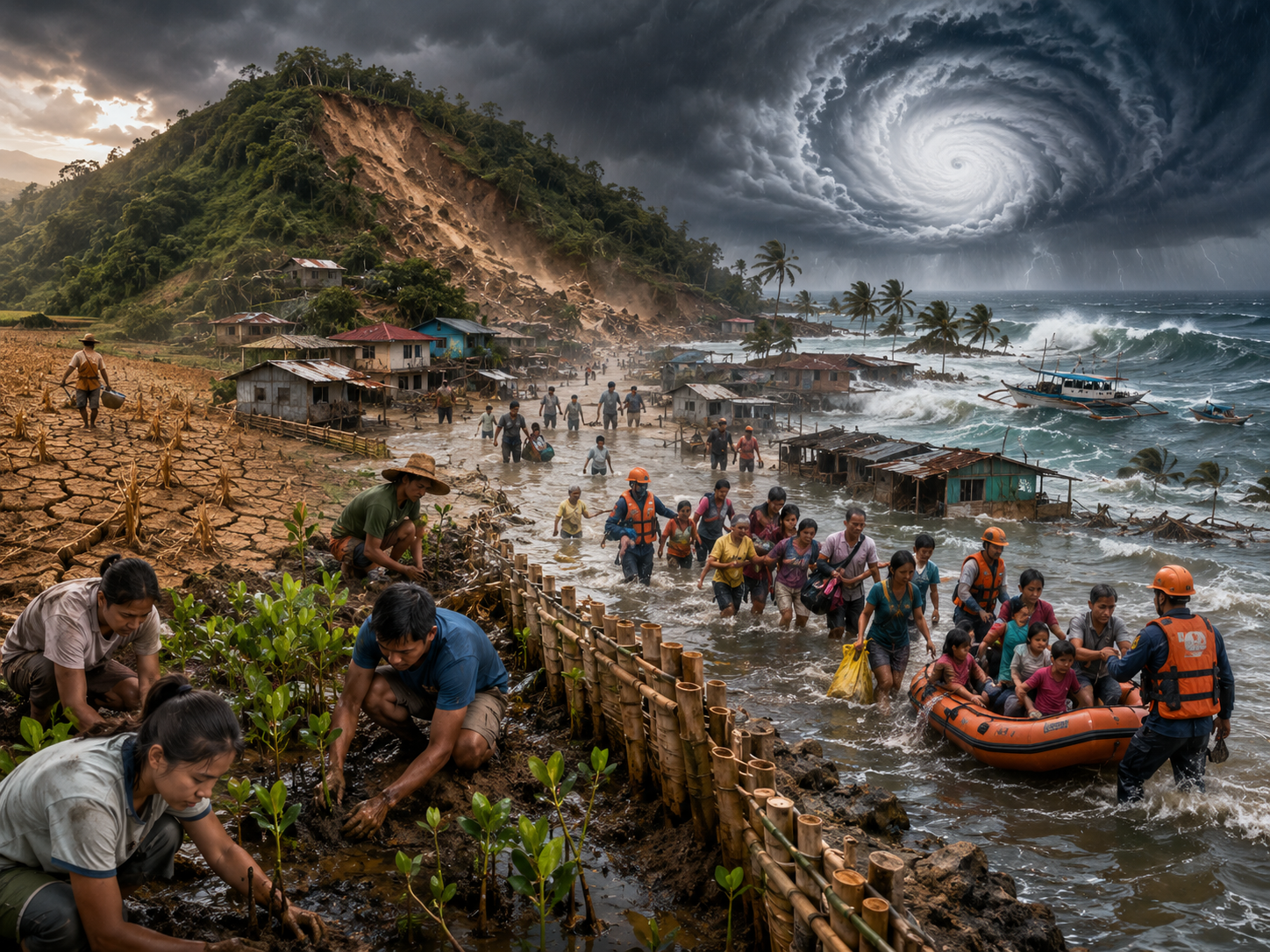
The Philippines is highly susceptible to climate-related hazards due to its geographic location in Southeast Asia. Nestled in the typhoon belt and along the Pacific Ring of Fire, it faces a persistent threat of typhoons, floods, landslides, and rising sea levels. Climate change intensifies these hazards, leading to more frequent and destructive events that disrupt communities, damage infrastructure, and threaten livelihoods.
Typhoons are one of the most pressing threats. The country experiences an average of 20 tropical cyclones annually, with several causing extensive destruction. Climate models suggest that warmer ocean temperatures contribute to stronger storms with heavier rainfall, increasing the likelihood of flooding and landslides. Coastal populations and low-lying areas bear the brunt, often experiencing displacement and economic loss.
Rising sea levels and coastal erosion exacerbate these vulnerabilities. Mangroves and coral reefs, vital for buffering storm surges, are under severe stress due to human activity and climate change. Agricultural areas also face challenges from shifting rainfall patterns and prolonged dry spells, which threaten the livelihoods of millions of farmers and compromise national food security.
The Philippine government has prioritized disaster risk management to reduce the impact of climate hazards. Agencies like the National Disaster Risk Reduction and Management Council (NDRRMC) implement early warning systems, evacuation protocols, and relief operations. Investments in climate-resilient infrastructure, including flood barriers, reinforced roads, and evacuation centers, help protect vulnerable communities.
Community-based adaptation plays a critical role in resilience. Local initiatives, such as mangrove replanting, watershed protection, and disaster preparedness training, empower residents to respond effectively during emergencies. NGOs also contribute by providing technical assistance, emergency supplies, and education programs targeting high-risk areas.
International support enhances the Philippines’ ability to cope with climate change. Organizations provide funding, technological expertise, and climate monitoring systems that improve disaster preparedness and response. Collaborative projects focus on renewable energy, resilient infrastructure, and sustainable development practices, helping communities adapt to changing environmental conditions.
A multi-layered approach is necessary to address the risks of climate change in the Philippines. By integrating government policy, community action, and global cooperation, the nation can reduce disaster impacts and strengthen its resilience. Safeguarding lives, infrastructure, and ecosystems is critical as extreme weather events become more frequent and severe.