
Globalization does not touch every part of the Philippines in the same way. The daily life of someone living in Metro Manila can be very different from that of a farmer in Mindanao or a fisher in the Visayas. Urban areas, with their high-speed internet, massive shopping malls, and dense concentration of global companies, often feel closely connected to international flows of capital and culture. Rural communities, by contrast, may experience globalization more indirectly, through remittances, changing agricultural markets, or the arrival of new technologies.
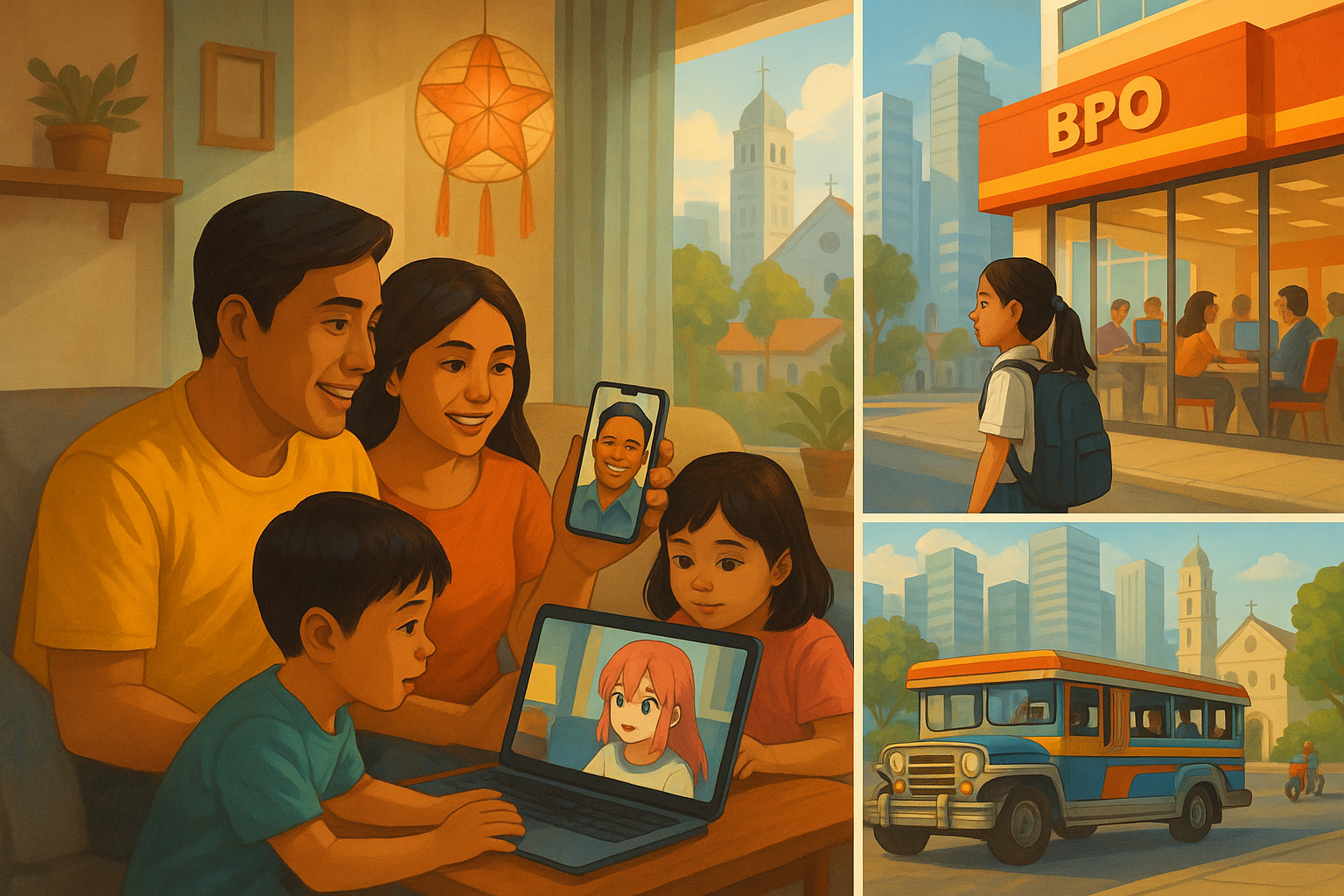
In cities, the experience of globalization is immediate and visible. Commuters pass billboards advertising international products, work in offices that serve overseas clients, and eat in restaurants offering foreign cuisines. Urban workers in BPO centers may speak to customers from different continents every night, bringing global interactions into their workday. Access to reliable internet and digital tools allows city residents to shop online, work remotely, and consume global media with relative ease. However, this fast-paced, interconnected lifestyle can come with stress, long commutes, and crowded living conditions.
Rural communities, on the other hand, often feel globalization through economic pressures and opportunities. Farmers may see prices of their crops influenced by global commodity markets and trade policies. Cheaper imported rice or vegetables, for example, can make it harder for local producers to compete. At the same time, better transportation and communication links allow rural entrepreneurs to reach wider markets. Some communities use social media to promote eco-tourism, local crafts, or organic products, turning global interest in sustainability into local income.
Migration forms a bridge between rural and urban, as well as between local and global. Many people from rural areas move to cities or abroad to find jobs, sending money back to their hometowns. These remittances fund the construction of modern houses, the purchase of appliances, and the education of younger siblings. As a result, even remote barangays may have homes filled with global goods—televisions, smartphones, imported food—despite limited local infrastructure. Along with these products come new ideas about education, gender roles, and lifestyle, carried by returning migrants or shared in family chats.
Infrastructure and digital access create significant differences in how globalization is lived. Urban students typically have better internet access, making it easier to join online classes, research assignments, or apply for overseas opportunities. Rural students may depend on unstable connections or shared devices, limiting their ability to fully participate in a digitally driven world. This digital divide can widen existing inequalities, as those with better connectivity gain more from global educational and economic networks.
Cultural change also plays out differently across regions. In cities, global fashion, music, and entertainment can dominate, sometimes overshadowing local traditions. Rural communities often maintain stronger ties to indigenous practices, local languages, and traditional festivals. Yet even in these areas, young people watch foreign shows on their phones, learn popular global dances, and follow international influencers. Communities respond in various ways, from embracing hybrid cultural forms to actively promoting local heritage through schools and tourism campaigns.
Overall, globalization in the Philippines is a complex, uneven process. It brings new chances for economic growth, education, and cultural exchange, but it also introduces new risks and inequalities. By looking closely at both urban streets and rural villages, it becomes clear that global forces are woven into daily routines in diverse ways. Understanding these differences is essential for creating policies and community initiatives that ensure the benefits of globalization are shared more fairly across the archipelago.