
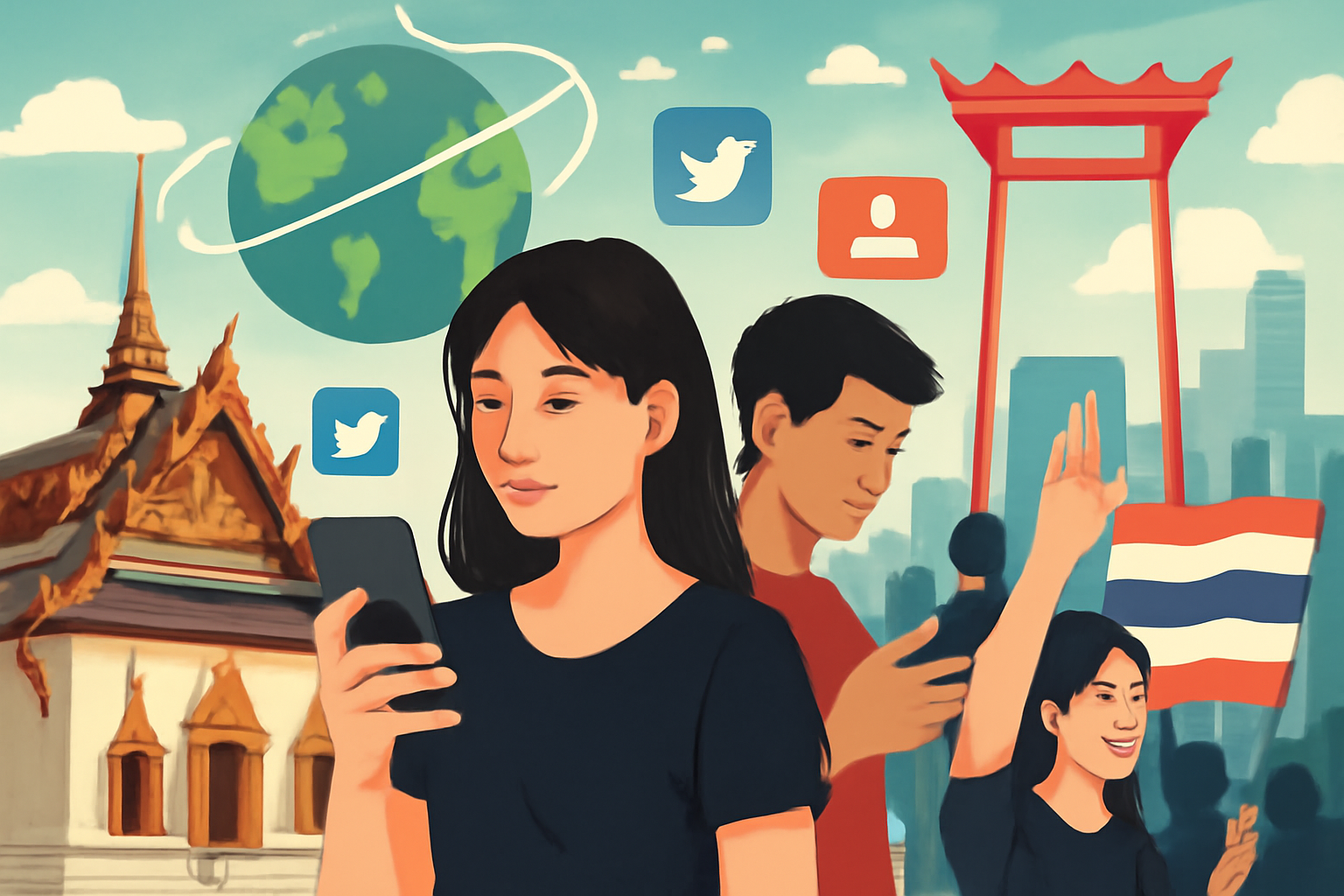
Thailand is undergoing a significant social transformation, with globalization and social media playing pivotal roles in shaping the country’s future. These forces have had a profound impact on Thai culture, politics, and economy, creating new opportunities and challenges as the nation adapts to a rapidly changing world. The interplay between global influences and digital communication platforms is driving social change in ways that are reshaping the Thai experience.
Globalization has facilitated Thailand’s integration into the global economy, leading to increased trade, investment, and cultural exchange. The country has become an important player in sectors like tourism, manufacturing, and agriculture, benefiting from its position as a key hub in Southeast Asia. However, this global connectivity has also introduced new pressures, including the challenge of balancing traditional Thai culture with foreign influences. In urban areas like Bangkok, Western ideals have often displaced local customs, leading to debates about the erosion of Thai identity.
Social media has acted as both a catalyst and a platform for social change in Thailand. The proliferation of platforms like Facebook, Twitter, and Instagram has transformed the way Thai people communicate, access information, and engage with the world. Social media has democratized information, allowing citizens to become more active in public discourse and political movements. The 2020 pro-democracy protests in Thailand, for example, were heavily organized and publicized via social media, highlighting the power of digital tools in shaping the country’s political landscape.
However, the rise of social media has also created new challenges. The spread of fake news, misinformation, and hate speech has raised concerns about the integrity of public discourse. Social media can easily become a tool for political manipulation, with different factions using digital platforms to push their own agendas and spread polarized messages. This has led to increased political polarization, with social media amplifying divisions rather than promoting constructive dialogue.
The younger generation in Thailand is particularly affected by the rise of globalization and social media. Growing up in a digital world, young Thais are more likely to embrace global ideas, question traditional norms, and demand greater political and social freedoms. Social media has provided them with a platform to voice their opinions, organize protests, and advocate for issues such as LGBTQ rights, gender equality, and democratic reform. This shift is challenging long-standing societal structures, and younger generations are pushing for more progressive changes in Thai society.
The Thai government has acknowledged the influence of social media and has taken steps to regulate the digital space. Laws have been introduced to control the spread of false information, and efforts have been made to monitor online content. While these regulations are aimed at maintaining social order, they have sparked debates about censorship and the limits of free speech in the digital age.
Thailand’s journey through globalization and the digital age is one of balancing progress with tradition. The influence of these forces has reshaped the country in profound ways, offering new opportunities while also presenting significant challenges. The country’s ability to navigate these changes will shape its future, as Thailand continues to adapt to the globalized world while preserving its unique cultural identity.