
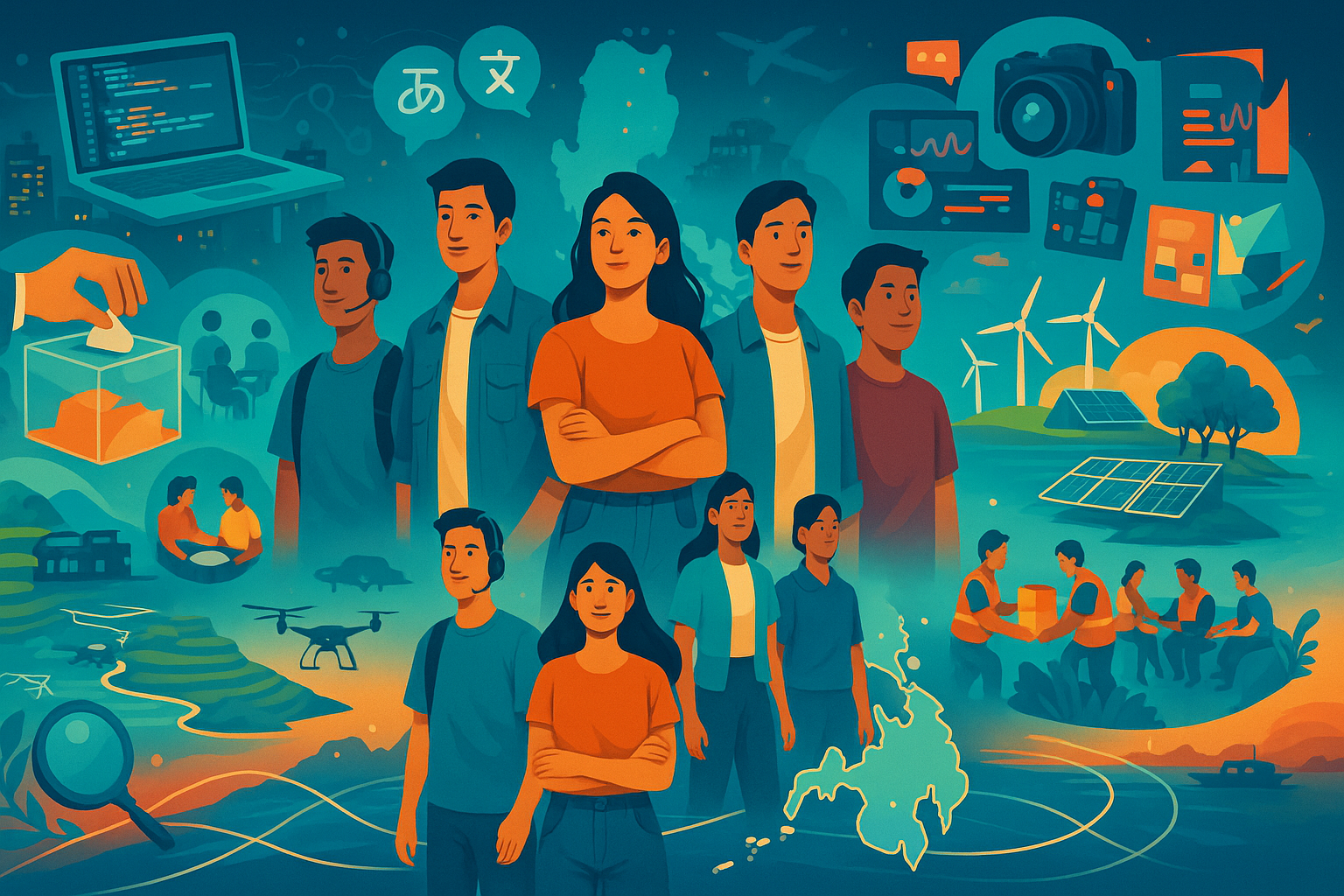
The Philippines sits on the frontlines of climate risk. For young people, this is not an abstract issue—typhoons disrupt classes, floods threaten homes, and heat waves compromise health and productivity. Globalization intensifies these pressures by tying local livelihoods to volatile supply chains and energy markets. Yet it also provides tools: climate science, finance mechanisms, and cross-border advocacy networks that youth can mobilize.
Adaptation begins with local knowledge. Youth groups can map drainage, monitor air quality near schools, and advocate for shade, water, and ventilation in classrooms. Integrating climate risk into school projects—such as campus rain gardens or solar rooftops—turns theory into practice. Universities can partner with local governments to pilot early warning systems and nature-based solutions, creating internships that pay students to protect their communities.
Urbanization compounds vulnerability. Metro areas offer education and jobs, but congestion, poor public transport, and limited green space affect mental and physical health. Walkable streets, protected bike lanes, and reliable buses cut commute stress and pollution. Pocket parks, community gyms, and cultural venues provide low-cost spaces for youth connection. Urban planning that centers young people—safe crossings, lighting, gender-sensitive design—pays dividends in participation and safety.
Well-being is multi-dimensional. Nutrition, sleep, reproductive health, and psychological safety determine whether students can learn and workers can perform. Youth-friendly clinics and school-based health programs reduce barriers to care. Telehealth expands reach to islands and mountain communities. Training teachers and peer leaders to recognize burnout, anxiety, and trauma builds early-response capacity; confidentiality and referral pathways encourage help-seeking.
Economic hope intersects with sustainability. Green jobs—from solar installation and energy auditing to upcycling and coastal rehabilitation—create purpose-filled careers. Technical-vocational institutions can update curricula to include climate-resilient agriculture, marine conservation, and circular design. Incubators that fund youth-led ventures in clean tech or agroforestry show that local solutions can compete globally. Transparent carbon markets and grants allow student teams to scale pilots into enterprises.
Information integrity underpins all of this. In an era of viral rumors, youth need scientific literacy and practical skepticism. Partnerships with researchers, local journalists, and citizen science platforms build trust and habit. When young people collect data, publish dashboards, and present findings to councils, they learn governance by doing and anchor policy in lived experience.
A liveable future for Filipino youth is both a policy project and a cultural project. It requires investments in infrastructure and institutions, and it thrives on solidarity—families, schools, faith groups, and clubs that invite participation. Globalization supplies the tools to collaborate beyond borders; local communities supply the stakes. When these meet, young Filipinos can turn climate anxiety into climate leadership and make cities and towns that are safer, kinder, and more sustainable for the generations to come.