
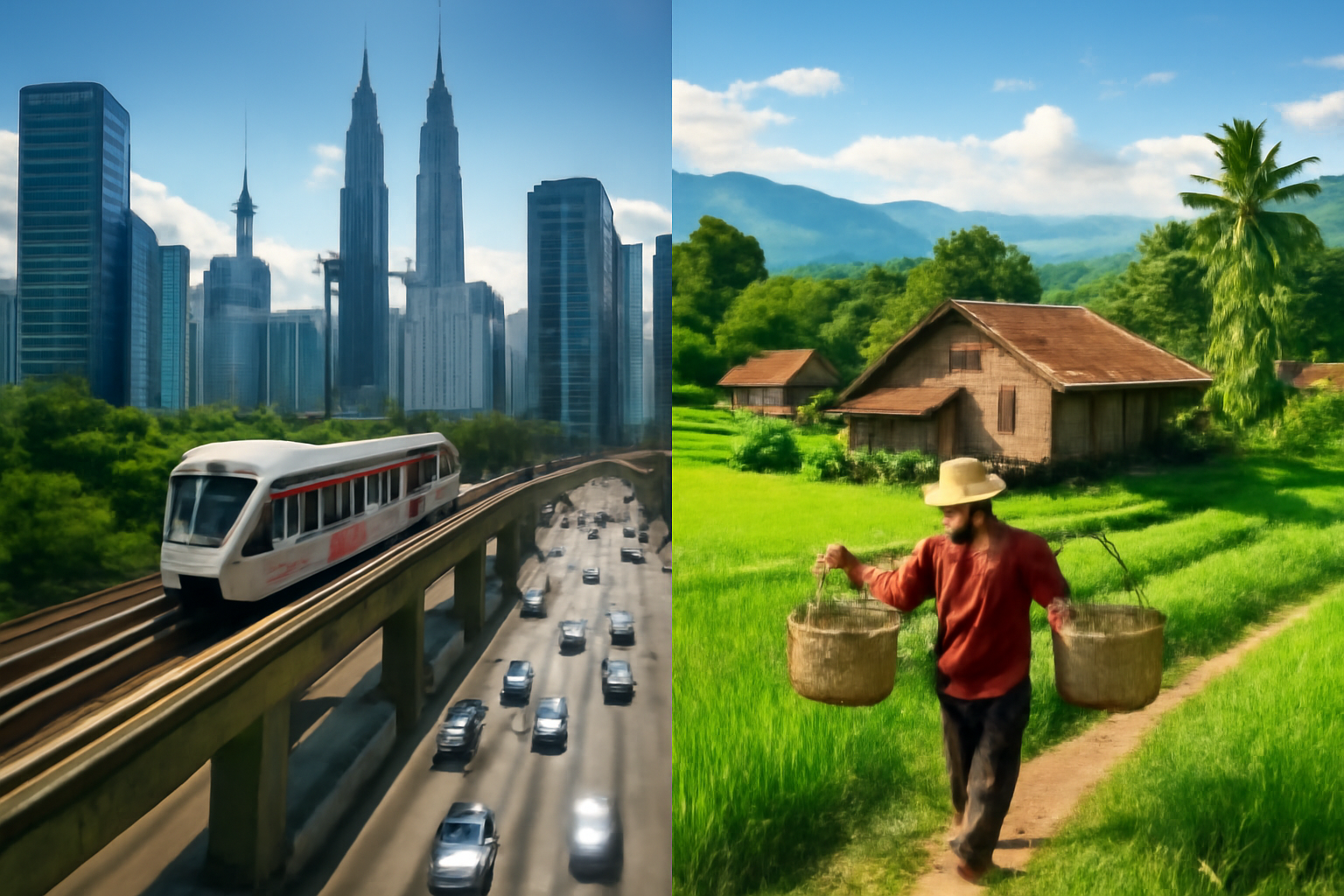
In Malaysia, urban and rural lifestyles are separated by more than just geography; they represent fundamentally different ways of life. While urban areas are marked by convenience, modernity, and economic opportunities, rural areas offer a quieter existence with a closer connection to nature and community.
Urban Life in Malaysia: Fast-Paced and Modern
In the major cities of Malaysia, such as Kuala Lumpur, Johor Bahru, and Penang, the lifestyle is urban, fast-paced, and highly developed. These areas are characterized by skyscrapers, bustling commercial centers, and advanced infrastructure, including efficient public transport networks. The cities provide a wide range of opportunities in sectors like technology, healthcare, and finance. In addition, urban residents benefit from access to world-class shopping malls, diverse restaurants, and extensive entertainment options.
However, city life is not without its challenges. The rapid population growth and increasing demand for space have resulted in higher living costs. Property prices, especially in cities like Kuala Lumpur, have soared, making home ownership a distant dream for many. Alongside this, traffic congestion is a major issue in urban areas, leading to long commutes and heightened levels of stress. Pollution, both air and noise, is another urban problem that affects quality of life.
Rural Living: Peaceful but Challenging
Life in rural Malaysia offers a stark contrast to the urban hustle. Villages in regions like Sabah, Kelantan, and Terengganu offer a slower, more relaxed lifestyle. People living in rural areas tend to focus on agricultural practices, fishing, or running small local businesses. The natural surroundings are breathtaking, with expansive green landscapes and clean air providing a peaceful environment that many city dwellers long for.
However, rural life presents its own set of challenges. While the cost of living is lower, access to services such as healthcare, education, and high-speed internet can be limited. Many rural areas also lack robust infrastructure, with poorly maintained roads and inconsistent electricity supply. Job opportunities are limited, and many rural youths move to urban areas in search of better career prospects. Additionally, rural businesses face difficulty reaching broader markets due to limited digital connectivity.
Challenges in Urban and Rural Areas
Urban life is often overshadowed by the high cost of living, overcrowding, and pollution. While the convenience of city amenities is undeniable, it comes at a price. Cities are increasingly becoming difficult to navigate due to heavy traffic, and the increasing population density is putting strain on resources such as housing, healthcare, and public transportation.
On the other hand, rural areas face challenges related to limited access to essential services, lack of infrastructure, and fewer employment opportunities. Though life in the countryside is generally peaceful and affordable, rural residents often struggle to access quality education, healthcare, and modern technologies. Many rural businesses also lack the tools to grow and expand due to these infrastructural limitations.
Opportunities in Urban and Rural Settings
The opportunities available in urban areas are largely driven by the diversity of industries, high-paying jobs, and entrepreneurship opportunities. In cities, there are numerous avenues for career growth, particularly in the fields of technology, finance, and services. Additionally, cities foster a culture of innovation, with startups and small businesses often emerging to meet the demands of the growing population.
Meanwhile, rural areas offer opportunities in sectors like agriculture, eco-tourism, and rural entrepreneurship. With growing interest in organic farming and sustainable tourism, rural residents can capitalize on these trends. Furthermore, government programs aimed at rural development are working to improve infrastructure, provide financial support for small businesses, and connect rural populations with new technologies and markets.