
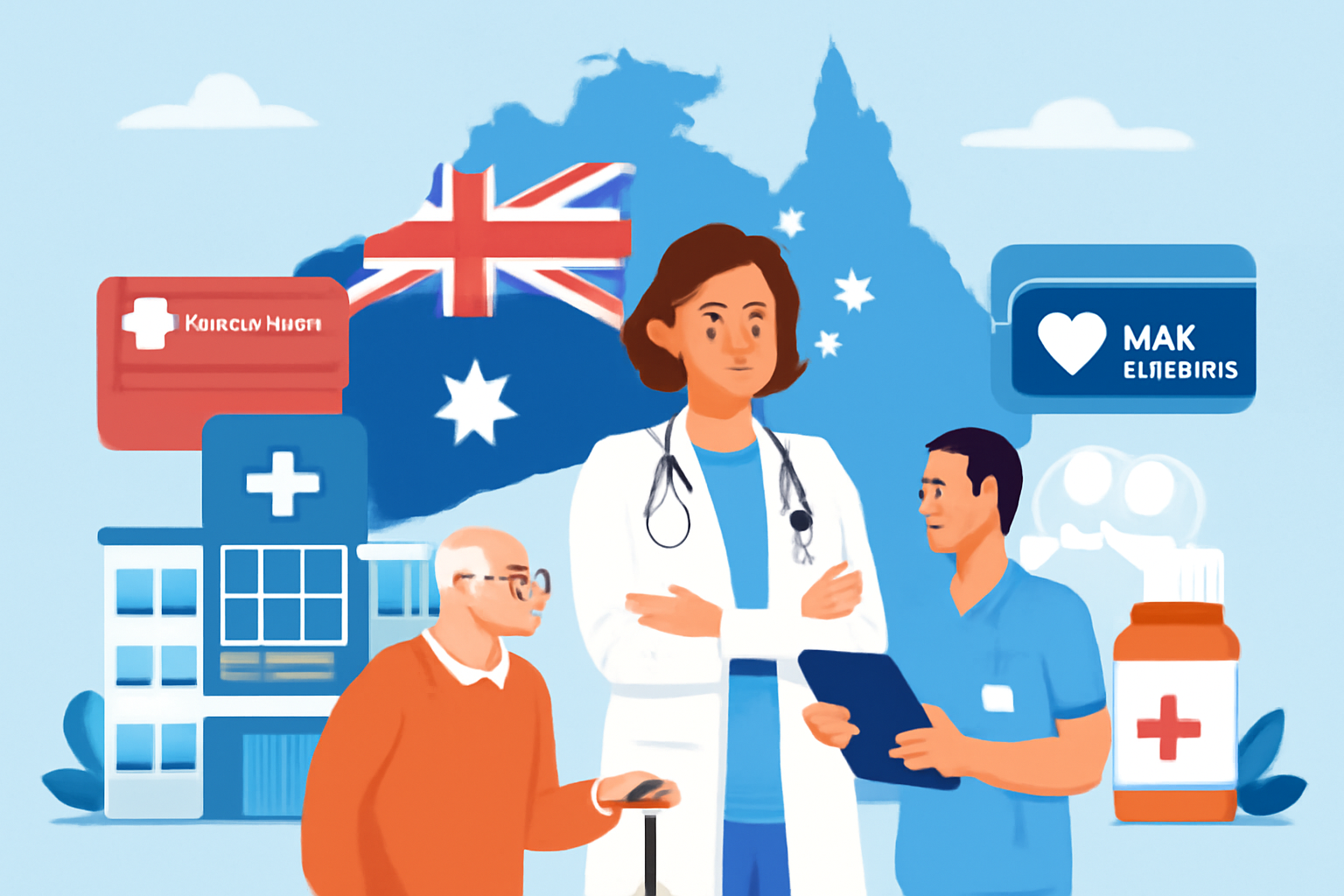
Australia’s healthcare system is built around the principle of universal access, ensuring that all citizens and permanent residents have equal opportunities to receive essential medical care, regardless of their financial status. Central to this commitment is the Medicare program, which offers comprehensive healthcare services funded primarily through taxation.
Medicare was established in 1984 with the goal of providing equitable healthcare access to all Australians. The program covers essential services like doctor consultations, hospital care, and certain medical procedures. It is primarily funded through general taxation and the Medicare levy, which is a small tax paid by individuals based on their income. This structure ensures that healthcare services are accessible to everyone, reducing the financial barriers that often prevent people from seeking medical attention.
In addition to the Medicare system, many Australians opt for private health insurance, which offers extra benefits beyond what is covered by Medicare. Private insurance allows individuals to seek treatment in private hospitals, access elective surgeries without long waiting times, and receive services such as dental and optical care. The government offers incentives like rebates on premiums to encourage the uptake of private insurance, which helps reduce the burden on the public healthcare system.
The Pharmaceutical Benefits Scheme (PBS) is another key aspect of Australia’s healthcare system. It makes prescription medications more affordable by subsidizing their cost, ensuring that individuals with chronic conditions or long-term health needs are not burdened with high drug expenses. The PBS is critical in helping manage public health and maintaining affordable access to necessary treatments for all Australians.
Australia’s public hospitals provide another critical layer of support, offering free medical care for Australian residents. These hospitals offer a wide range of services, including emergency care, surgeries, and maternity care. Public hospitals are especially important in rural and remote areas where access to private healthcare may be limited. They ensure that all Australians, regardless of where they live, can access essential healthcare services.
The Australian healthcare system also emphasizes the role of primary healthcare. General practitioners (GPs) are the first point of contact for patients, providing care for a wide range of medical conditions. GPs also manage chronic diseases and provide referrals to specialists when necessary. This system helps to prevent the escalation of health problems and reduces the burden on hospitals by addressing issues early and efficiently.
Preventive care plays a significant role in Australia’s healthcare system. The government invests in public health campaigns focused on reducing smoking, encouraging physical activity, and promoting healthy eating. These initiatives aim to reduce the prevalence of chronic diseases, such as diabetes and heart disease, thereby improving public health and reducing healthcare costs.
Despite some challenges, including an aging population and rising healthcare costs, Australia’s healthcare system is an example of an effective and affordable model. By offering universal access to healthcare, combining public and private services, and focusing on prevention, Australia continues to provide a healthcare system that prioritizes the well-being of its residents.