
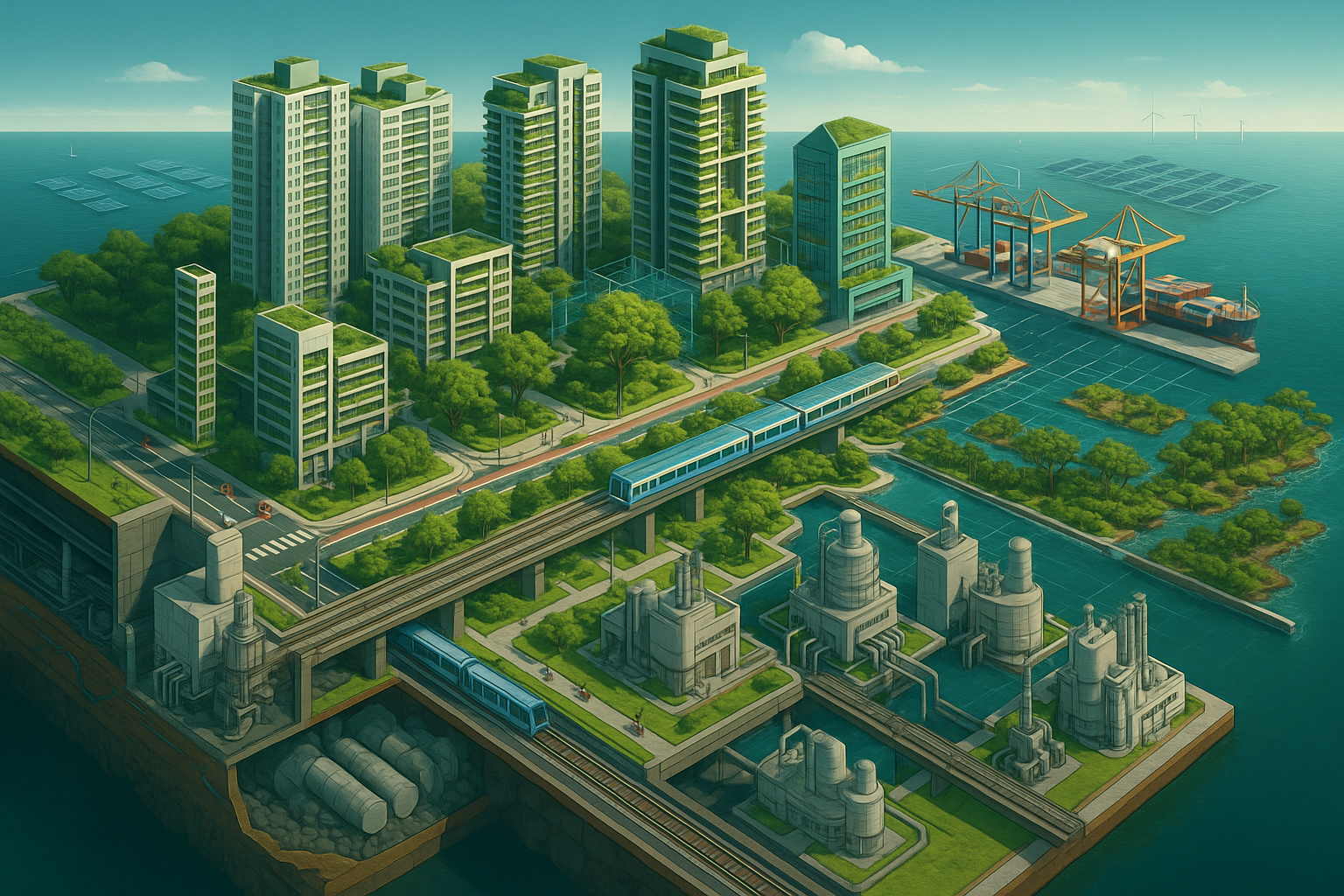
Scarcity is not purely technical; it is social. When each hectare carries multiple claims—housing, transport, commerce, habitat—trust in institutions and the planning process becomes critical. Singapore’s approach relies on clear long-term plans, iterative consultations, and pilots that gather real-world feedback before scaling. Residents accept higher densities when public spaces are generous, transport is reliable, and amenities are woven into daily life.
Housing policy anchors this compact. Public housing offers a spectrum of price points near transit, while mixed-use precincts bring markets, clinics, and schools within walking distance. As neighborhoods age, rejuvenation upgrades accessibility, greenery, and thermal comfort without erasing local identity. Heritage is not frozen in amber; it is curated alongside new infrastructure so the city evolves without losing its narrative.
Mobility choices reflect land scarcity. Road growth is capped, parking is rationed, and pricing tools manage congestion, nudging commuters toward trains, buses, and active travel. Rail capacity expansions run ahead of demand to ensure comfort at high densities. Streets are redesigned for people, with wider sidewalks, shade, and crossings timed for safety. The payoff is a city where daily movement consumes less space and energy.
Nature and development still collide. Debates over alignments, buffer zones, and tree removal are real and sometimes heated. Government agencies increasingly publish studies, run environmental impact assessments, and adjust plans where feasible. Community groups contribute biodiversity data and steward neighborhood green spaces. This dialog does not eliminate conflict, but it surfaces trade-offs early, before designs harden.
Looking ahead, the craft of megadensity will involve deeper layering: more underground networks, more multi-functional waterfronts, and buildings that act like mini-infrastructures—capturing energy, harvesting water, and hosting habitat. The central lesson remains unchanged. On a small island with few natural resources, livability is engineered through careful choices, constant iteration, and a public realm that earns its keep every day.