
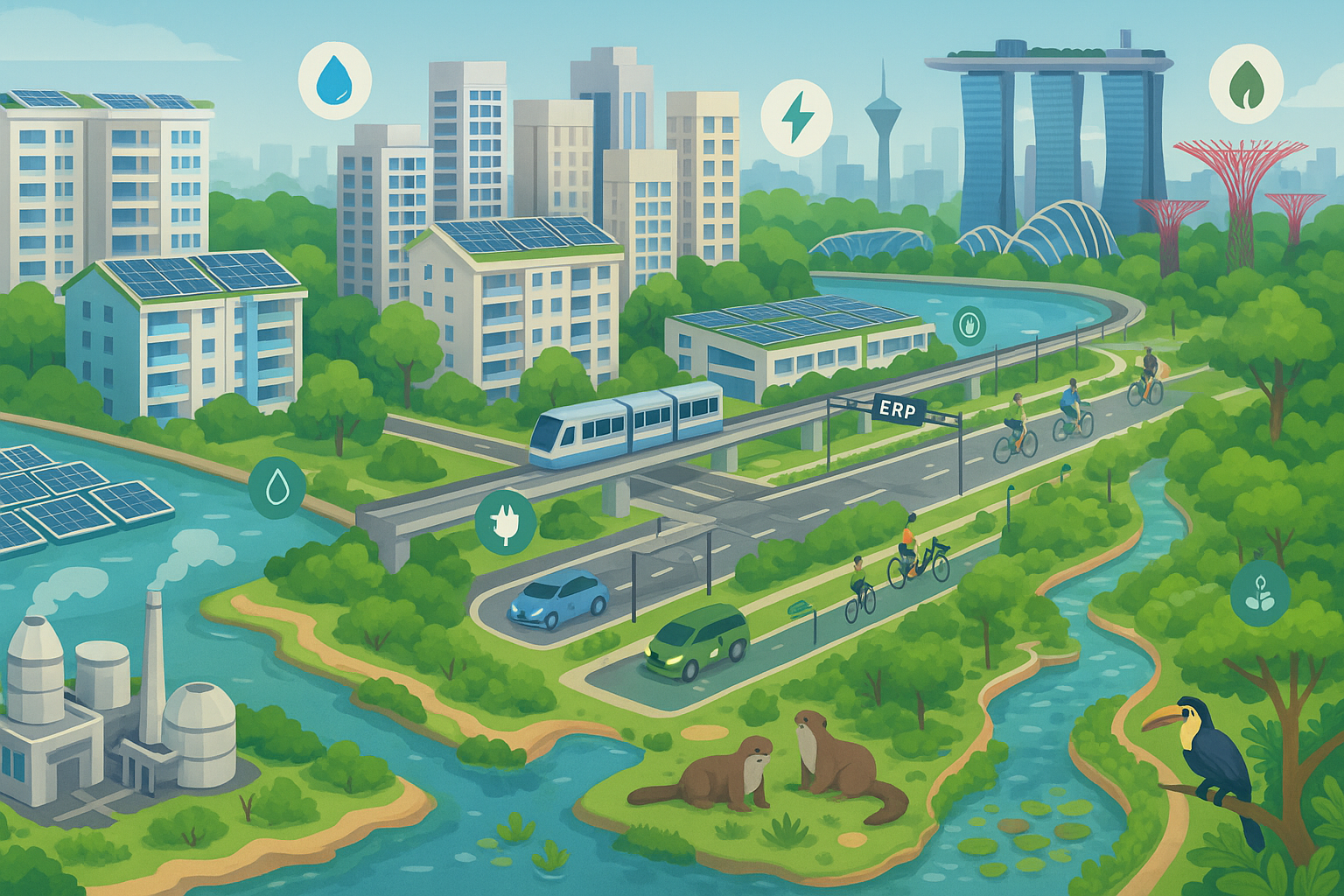
Singapore’s decarbonization playbook runs on three intertwined engines: an efficiency‑first energy system, a financial sector that prices climate risk, and social design that changes how people move and consume. None of these is flashy alone; together they shift the baseline.
On energy, the island leans into what it can scale: solar, system efficiency, and regional interconnection. Rooftop and floating PV stretch across public housing and reservoirs, paired with smart inverters and batteries to smooth variability. District cooling and high‑performance buildings cut electricity demand, while digital meters and demand‑response programs flatten peak loads. For firm power, Singapore explores low‑carbon imports via regional grids and studies hydrogen‑ready turbines as gas plants are refurbished for the future.
Industry is pushed by a rising carbon tax and pulled by green finance. The tax gives a predictable price to emissions, encouraging fuel switching, waste‑heat recovery, and electrification. Meanwhile, sustainability‑linked loans and green bonds reduce capital costs for projects that hit verified performance targets. Disclosure requirements tighten year by year, turning climate metrics into boardroom priorities rather than PR talking points.
Mobility illustrates the behavioral engine. Electronic Road Pricing internalizes congestion costs, vehicle quotas cap fleet size, and EV incentives lower barriers to adoption. Frequent, reliable metro lines take the heaviest loads, complemented by bus priority corridors and walk‑cycle infrastructure that makes short trips pleasant. The outcome is not just fewer emissions but reclaimed street space and quieter neighborhoods.
Waste and water systems reinforce the energy story. Integrated complexes like Tuas Nexus harvest biogas from organics, with electricity looping back into treatment operations. NEWater stabilizes supplies for industry, reducing vulnerability to droughts and geopolitics. ABC Waters retrofits tame runoff while cooling districts, cutting air‑conditioning demand on hot days.
The social layer is deliberate. Public campaigns frame sustainability as convenience and pride rather than sacrifice: cleaner corridors, comfortable parks, efficient appliances, and participatory tree‑planting. Open data dashboards invite scrutiny and spur friendly competition among buildings and precincts. Schools and polytechnics seed the talent pipeline with courses in environmental engineering, circular design, and green finance.
Crucially, Singapore treats policies as portfolios that can be tuned. Pilots run in sandboxes; results inform scaling; targets are revised when technology costs shift. This iterative discipline lets the city absorb new tools—advanced materials, AI for predictive maintenance, or carbon capture—without betting the farm on any single silver bullet.
The cumulative effect is a pragmatic transition suited to a compact, trade‑dependent metropolis: squeeze waste out of the system, fund what works, and make sustainable choices the easiest ones. As other cities search for models, Singapore’s lesson is less about headline projects and more about the machinery of coordination that keeps emissions falling while daily life gets better.