
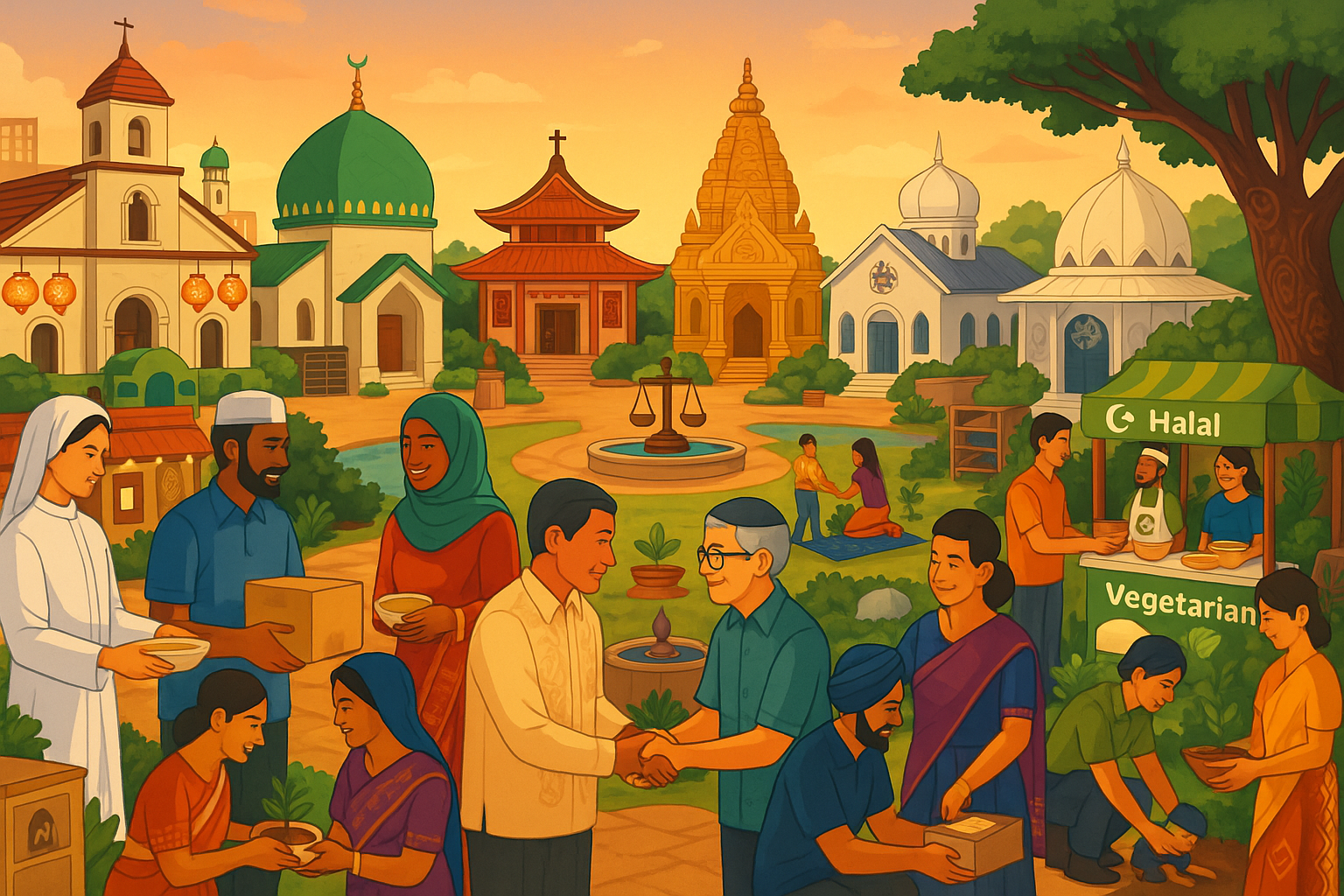
To understand religious diversity in the Philippines today, start with its scale and spread. Catholicism remains numerically dominant, shaping public rituals from Simbang Gabi to grand town fiestas. Islam is concentrated in Mindanao and parts of the Sulu archipelago, with sizable diasporas in major cities. Protestant denominations and independent Philippine churches maintain broad urban and rural presences. Smaller but visible communities—Buddhist, Hindu, Sikh, Jewish, Bahá’í, and indigenous spiritualities—contribute distinctive institutions, from temples and gurdwaras to study circles and cultural schools.
Everyday coexistence is propped up by habits and laws. The constitution secures freedom of worship, and legal pluralism recognizes Muslim personal status through dedicated courts. The BARMM structure gives political expression to historical identities and aspirations, aligning governance with cultural norms while remaining within the republic. Education initiatives that integrate Arabic language and Islamic values in public schools have reduced barriers for Muslim learners.
Religious organizations wield significant social capital. They run universities, hospitals, orphanages, and relief agencies. During emergencies, these networks act as the country’s moral logistics—mobilizing volunteers, opening sanctuaries, and coordinating with local governments. Media ministries, from radio to livestreamed services, knit dispersed members and amplify messages about civic responsibility.
Syncretism remains a hallmark. Folk Catholicism blends with ancestor reverence; charismatic worship incorporates indigenous rhythms; Muslim celebrations in mixed neighborhoods accommodate Christian schedules and vice versa. Dietary practices—halal, vegetarian, or fasting disciplines—are increasingly understood by workplaces and schools, making inclusion routine rather than exceptional.
The challenges are sobering but not insurmountable. Stereotypes about Moros, sporadic communal tensions, and the persistence of legal provisions that can chill expression expose stress points. The absence of civil divorce for most citizens, contrasted with divorce available in Muslim law, creates unequal experiences of family life. Conscientious objection, LGBTQ+ inclusion in faith communities, and reproductive health policy continue to test the boundaries of tolerance.
Even so, the Philippine repertoire for managing difference has grown. Interfaith councils mediate disputes; youth exchanges and service‑learning forge friendships; cultural festivals invite neighbors to pray, eat, and tell stories together. Cities formalize accommodations—prayer rooms in terminals, signage for halal eateries, flexible uniforms—signaling that plurality is a civic asset. Looking ahead, the most durable gains will come from investments in education, equitable services in historically marginalized regions, and the steady work of leaders who can translate doctrine into solidarity. In this way, religious diversity becomes a source of social resilience and moral imagination for an archipelago that has long made room for many ways of believing.