
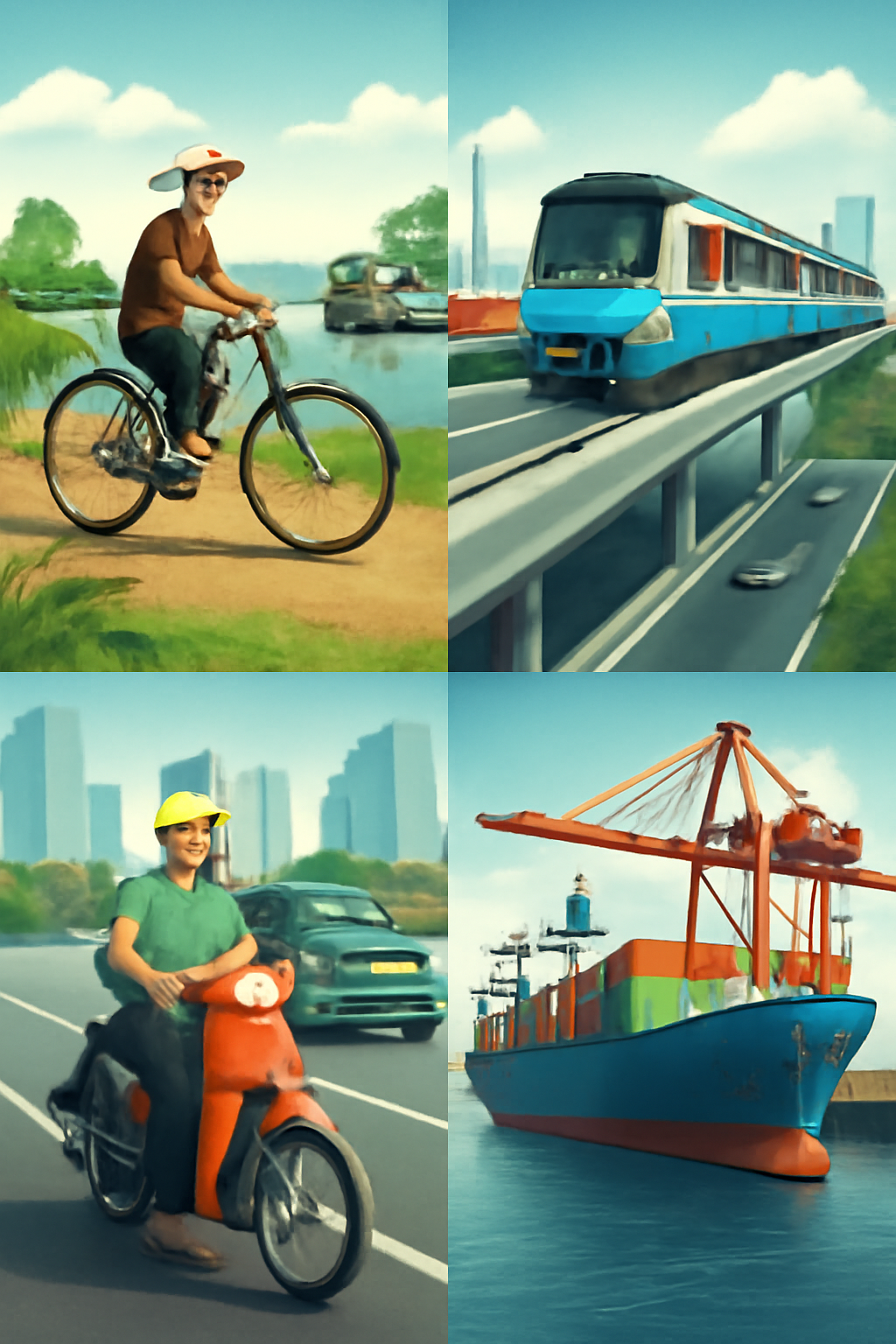
Vietnam’s transportation network has undergone remarkable changes in the past few decades, evolving from a limited and informal system to a modern and more sophisticated infrastructure that supports the country’s booming economy. The evolution of transportation in Vietnam is not just about building roads and railways; it is also about adapting to the needs of a growing population, urbanization, and changing environmental demands.
Historically, Vietnam’s transportation was largely reliant on traditional methods such as bicycles, pedicabs, and boats. In rural areas, waterways played a vital role in transporting goods and people, while in cities, motorbikes became the most common form of transport. The roads, particularly in the countryside, were poorly maintained, and the country’s overall transportation network was insufficient to meet the needs of a rapidly developing population.
With the economic reforms in the late 1980s, Vietnam began focusing on modernizing its infrastructure. The motorbike became the dominant mode of transport, and the rapid expansion of urban areas put further pressure on the existing infrastructure. To keep up with these demands, the government began investing in large-scale transportation projects.
Over the years, the country’s road network has seen significant improvements, with highways and intercity roads constructed to facilitate the movement of goods and passengers. Major projects such as the North-South Expressway have connected cities and regions, reducing travel time and increasing accessibility.
In the last decade, Vietnam’s focus has shifted to improving urban mobility. The rise of ride-hailing services like Grab has made it easier for people to move around cities, while also reducing traffic congestion and air pollution. Metro systems in Hanoi and Ho Chi Minh City are under development, providing a more sustainable and efficient solution for urban transit.
The government’s efforts to improve transportation extend beyond urban areas. Investments in freight rail systems and the expansion of major ports like Cai Mep are crucial in supporting the growing trade and logistics industries. With Vietnam’s continued growth as a manufacturing hub, an efficient transportation network is key to maintaining its competitive edge in the global market.
Vietnam’s transportation system is continuously evolving, and the future holds even more promise. With a focus on sustainable development, improved urban mobility, and advanced transport technologies, Vietnam is positioning itself as a leader in the region’s transportation landscape.