
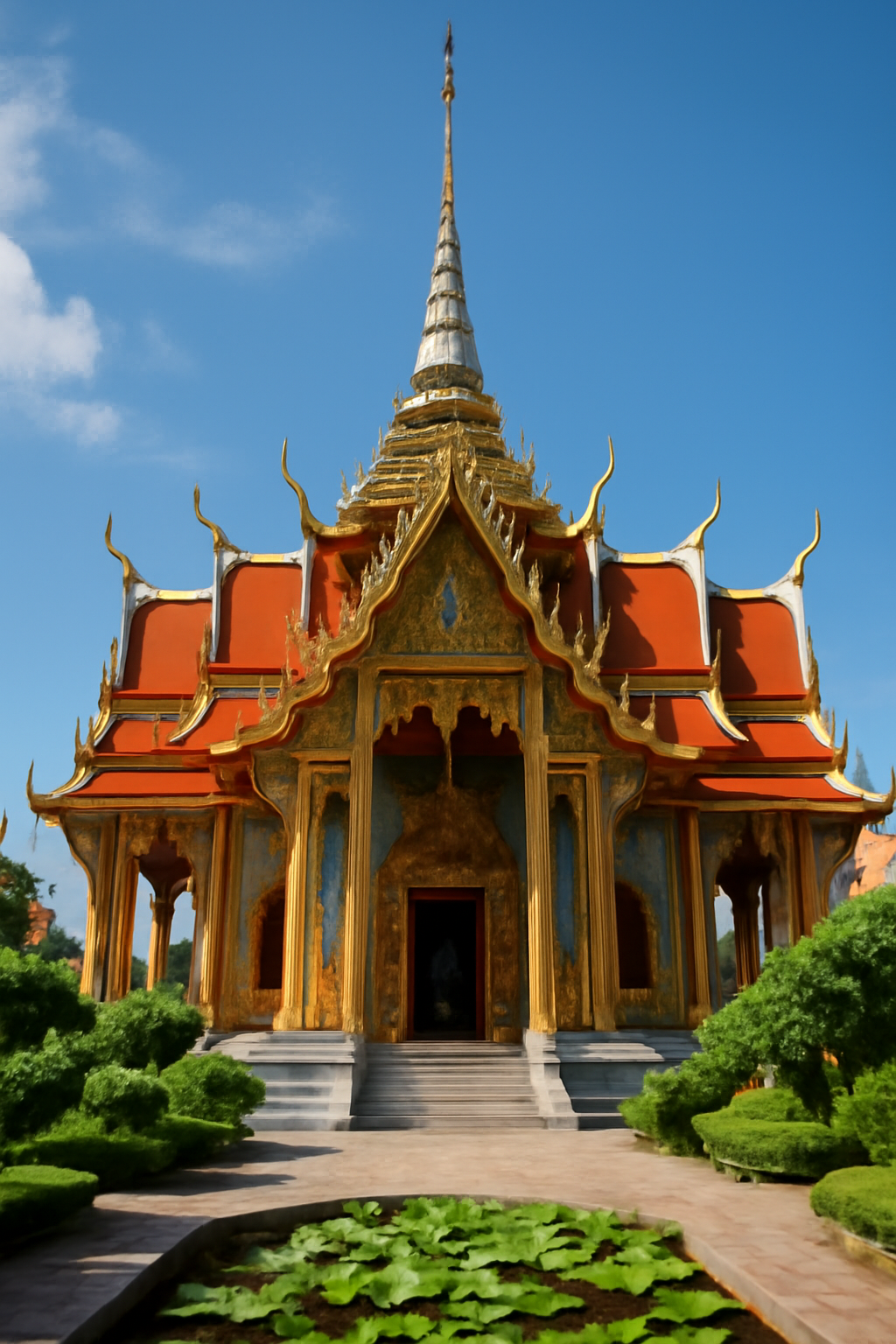
The architecture of Thai temples, or wat, is not only a visual delight but also a profound expression of the spiritual and philosophical ideals of Buddhism. These temples, with their ornate details and sacred symbolism, provide worshippers with a space for meditation, prayer, and reflection. The careful design and intricate craftsmanship reflect both Thailand’s artistic traditions and the deeply rooted Buddhist beliefs that shape the country’s culture.
At the heart of every Thai temple is the towering prang, a spire that rises above the temple complex and serves as a representation of Mount Meru, the center of the Buddhist universe. This central spire is adorned with intricate carvings, gold leaf, and mosaics, each element serving to emphasize the divine nature of the temple. The height of the prang symbolizes the ascent toward spiritual enlightenment, with its peak representing the ultimate goal of Nirvana.
The vihara, the main hall of the temple, is where rituals and ceremonies take place. Inside the vihara, large Buddha statues are often positioned at the center, symbolizing different aspects of the Buddha’s life and teachings. The interiors of these halls are further adorned with murals that depict scenes from the Buddha’s life, as well as teachings that illustrate key Buddhist concepts such as compassion, mindfulness, and the impermanence of life.
The roofs of Thai temples are another striking feature. Designed with sweeping curves and multiple tiers, the roofs resemble the petals of a lotus flower, a symbol of spiritual purity. The graceful roof design is not only beautiful but also practical, as it helps channel rainwater away from the temple. The roofs are often embellished with intricate carvings of mythical creatures, such as the Naga serpent, which symbolizes protection and spiritual power.
Gold plays an important role in Thai temple architecture, symbolizing purity and divine light. Gold leaf is frequently applied to statues, murals, and architectural elements, with the most notable examples being the gold-leafed Buddha statues that grace the interiors of many temples. Gold symbolizes the enlightenment that worshippers strive for in their spiritual journey.
The temple grounds are designed to create a peaceful environment for reflection and meditation. Many Thai temples feature gardens, ponds, and lush vegetation, symbolizing the harmony between nature and spirituality. The serene surroundings invite visitors to pause and reflect, further deepening their connection to the temple’s sacred atmosphere.
Overall, Thai temple architecture is a testament to the country’s rich cultural and religious heritage. Every aspect of the design, from the towering spires to the intricately decorated walls, is infused with symbolism and spiritual meaning. These temples continue to inspire awe and reverence in those who encounter them, offering a sacred space for worship, contemplation, and connection with the divine.