
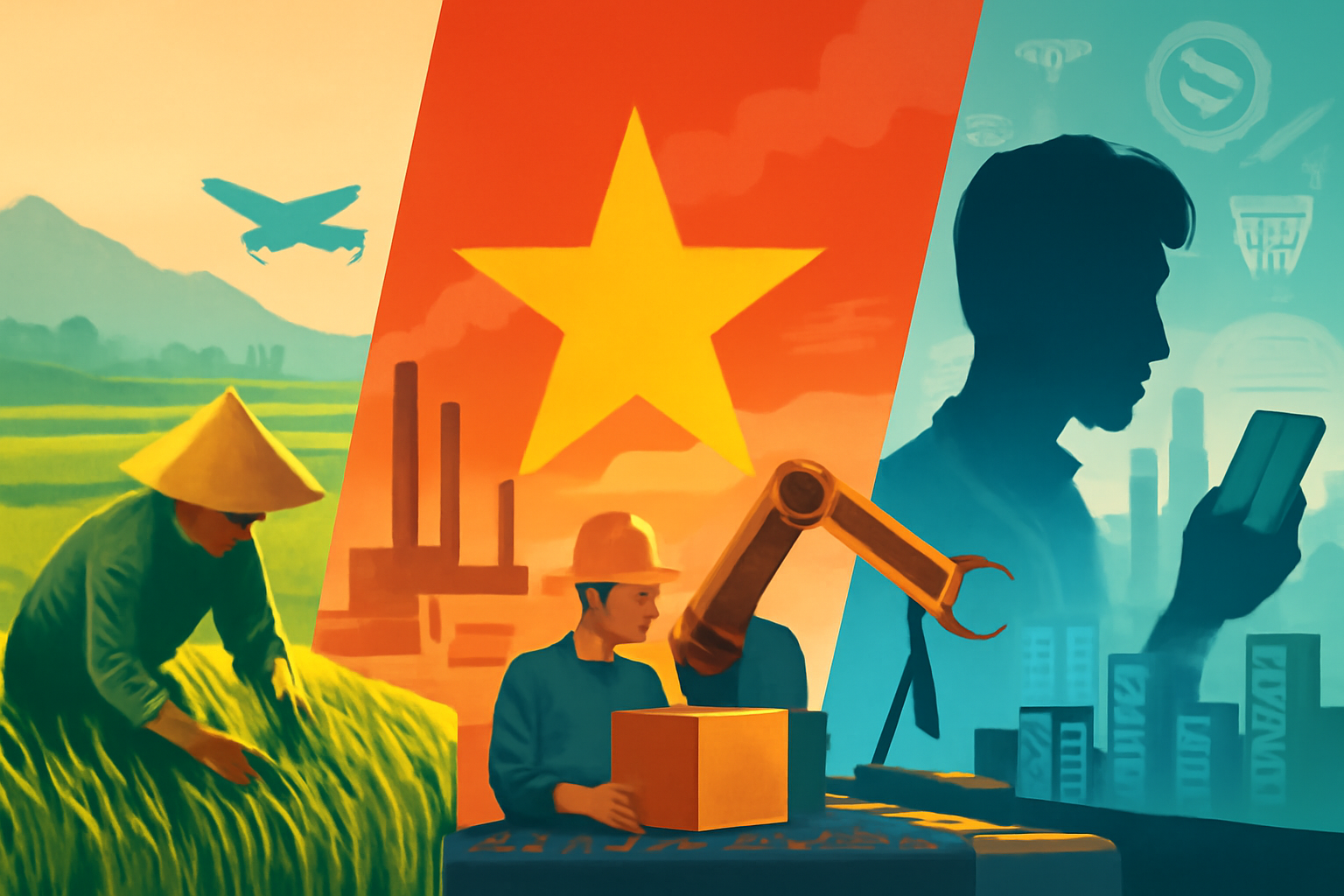
Vietnam’s journey from an agriculture-based economy to one characterized by industrial output and technological innovation is a remarkable story of economic growth. Through strategic planning, policy reforms, and embracing globalization, Vietnam has managed to diversify its economy and position itself as a rising economic powerhouse in Southeast Asia.
The Agricultural Foundation: A Starting Point for Economic Growth
Vietnam’s early economy was centered around agriculture. Rice, being the primary crop, formed the backbone of both domestic food security and export income. Alongside rice, Vietnam also cultivated crops like coffee, rubber, and tea, which were important export products. For decades, agriculture was the primary economic activity in the country, employing a large portion of the population.
During the 1980s, however, the government realized that agriculture could no longer be the sole driver of growth. The Đổi Mới reforms initiated a shift in focus toward diversifying the economy and fostering industrialization. These policies encouraged private sector participation and promoted more sustainable farming techniques, increasing agricultural productivity.
Industrialization: A New Era for Vietnam
In the 1990s, Vietnam’s economic focus shifted towards manufacturing and industrialization. With the implementation of favorable policies for foreign investment, multinational companies began to establish production bases in the country. This led to rapid growth in sectors such as textiles, electronics, and consumer goods.
The electronics sector, in particular, saw significant investment from companies like Samsung, which established large factories in Vietnam. The country quickly became a key player in the global electronics supply chain, exporting products like smartphones, televisions, and computer components.
Technological Innovation: Moving Toward a Digital Economy
As Vietnam’s industrial sector grew, so did its focus on technological innovation. Over the past decade, the government has placed considerable emphasis on fostering the digital economy. Investments in e-commerce, mobile technology, and fintech have led to the rise of domestic companies such as MoMo and Tiki, which have achieved significant success.
Vietnam’s strong internet infrastructure and young, digitally-savvy population have fueled the country’s tech boom. The rise of digital platforms has not only transformed traditional industries but also created new business opportunities, contributing to overall economic growth.
The Future: Challenges and Opportunities for Vietnam
While Vietnam has made incredible progress, it must continue to address challenges such as improving infrastructure, ensuring sustainable growth, and upgrading the skills of its workforce. The country’s transition from agriculture to industry and technology is far from complete, but the direction it is heading in offers considerable promise for the future.
Vietnam is well-positioned to continue its economic rise, driven by its vibrant industrial base and innovative tech sector, making it one of the most exciting economies in the Asia-Pacific region.