
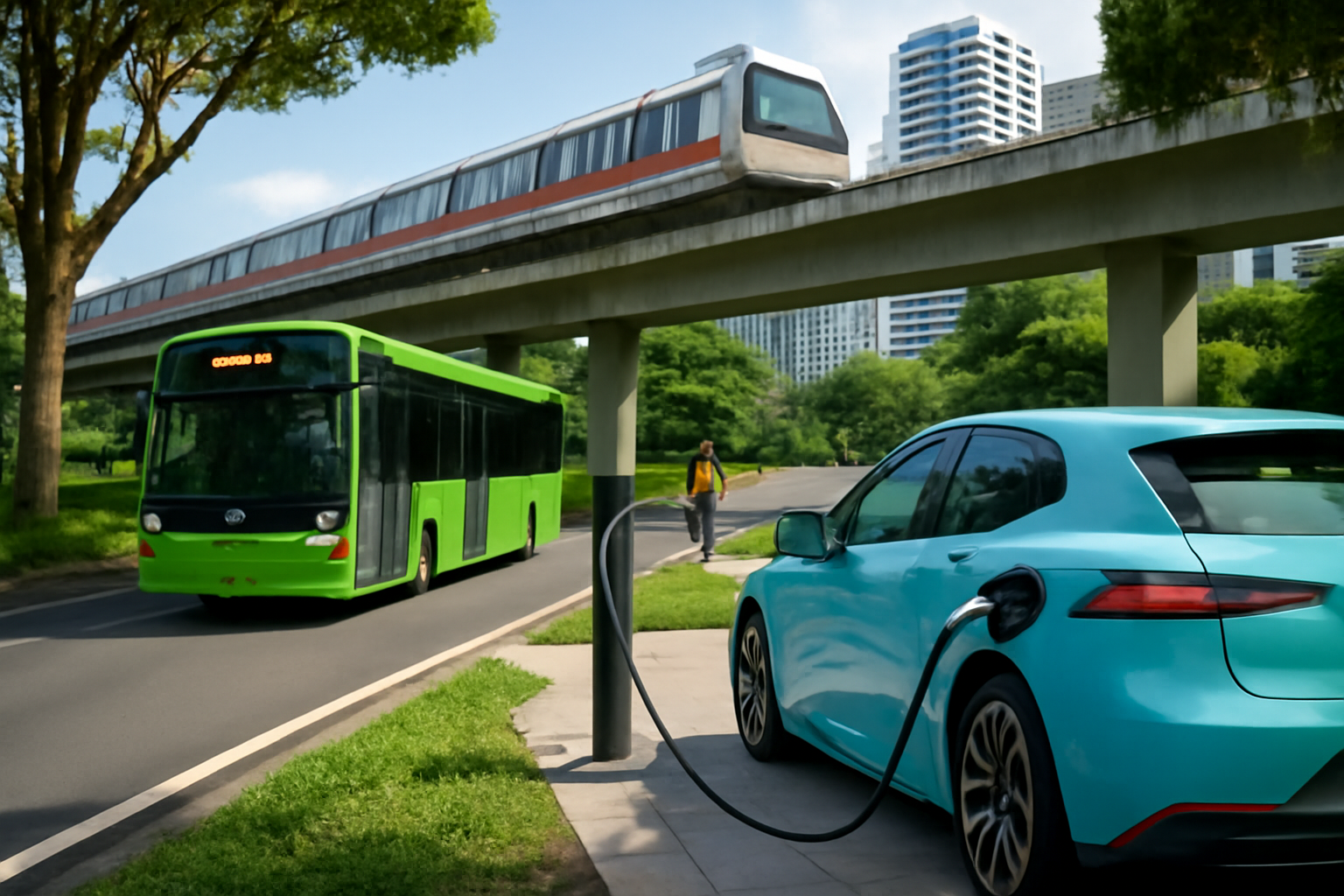
Singapore’s transportation system is a paragon of efficiency and sustainability, featuring a seamless blend of cutting-edge technology and environmental consciousness. With a strategic focus on minimizing congestion and reducing carbon emissions, Singapore has developed an extensive public transportation network that includes buses, taxis, and the Mass Rapid Transit (MRT) system. These elements work in tandem to provide an accessible, reliable, and sustainable solution for the city’s transportation needs.
The MRT system is the backbone of Singapore’s public transport. It covers vast areas of the city, connecting key neighborhoods and business districts. The MRT’s punctuality and efficiency make it a preferred mode of transport for daily commuters. The service is complemented by an extensive bus network, which serves as an important feeder system, providing connectivity to areas not accessible by train.
Singapore has placed a strong emphasis on sustainable transport practices. One of the most significant steps in this direction is the government’s move to phase out petrol and diesel vehicles by 2040. Instead, the city-state is promoting electric vehicles (EVs) to reduce harmful emissions. The government has provided financial incentives for individuals and companies to switch to EVs, along with the creation of a widespread network of charging stations to support this transition.
Electric buses have also become a focal point of Singapore’s sustainable transport efforts. These buses reduce the island’s reliance on fossil fuels and contribute to cleaner air quality. The government’s push for electric public transport is part of a broader strategy to cut carbon emissions and enhance the environmental sustainability of the entire transport system.
Another key element of Singapore’s transportation policy is the Electronic Road Pricing (ERP) system. The ERP system uses dynamic pricing to manage road usage and reduce congestion. Motorists are charged based on the time and location of their travel, with higher rates during peak periods. This pricing model helps ensure smoother traffic flow and reduces the need for extensive road expansions.
Lastly, the government has made significant strides in promoting alternative transportation methods such as cycling and walking. With dedicated cycling lanes and pedestrian paths, Singapore encourages its residents to use more sustainable and healthy modes of transport for shorter distances. These efforts are part of the city’s overall strategy to reduce car dependency and promote greener commuting options.
In conclusion, Singapore’s transportation system is a shining example of how urban transportation can be both efficient and sustainable. With its commitment to green technologies, smart pricing systems, and promotion of alternative modes of transport, Singapore continues to lead the way in building a more sustainable future for urban mobility.