
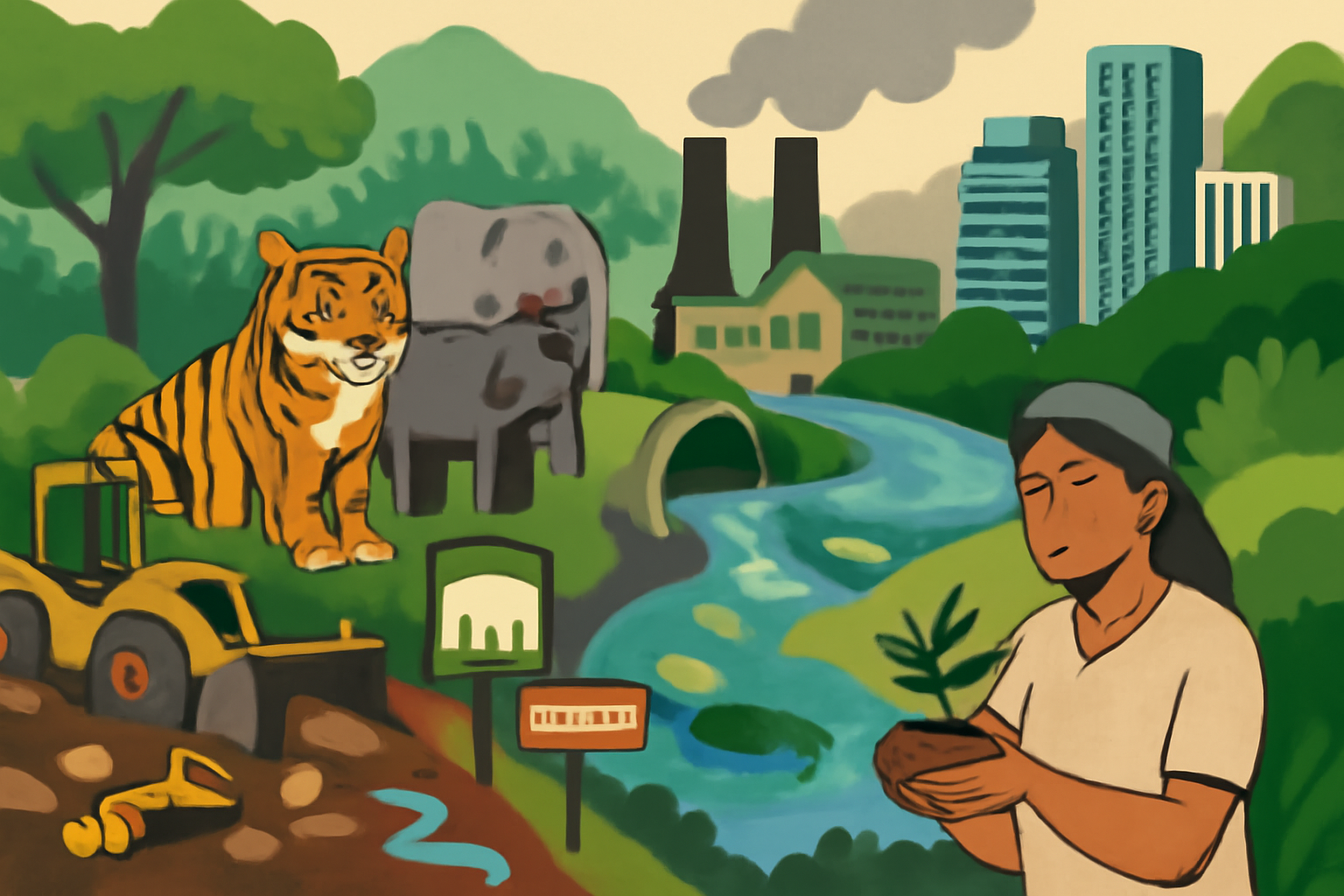
Malaysia’s natural environment is under threat due to a combination of deforestation, pollution, and unsustainable resource use. While these challenges are substantial, Malaysia has made significant strides in developing conservation programs and policies aimed at protecting the country’s unique ecosystems and biodiversity.
Deforestation and Its Consequences
Deforestation is perhaps the most significant environmental issue in Malaysia. The expansion of palm oil plantations has led to large-scale deforestation, threatening critical wildlife habitats. Iconic species such as the orangutan and Malayan tiger are losing their natural habitats, which makes them increasingly vulnerable to extinction.
To mitigate this, the government has adopted several measures, including stricter laws against illegal logging and the establishment of national parks. Furthermore, there is a growing effort to promote sustainable palm oil production practices through the RSPO certification. These measures aim to reduce the environmental impact of palm oil plantations and preserve the rich biodiversity of Malaysia’s forests.
Pollution and Waste Management Challenges
Pollution in Malaysia has reached alarming levels, especially in urban areas. The country faces challenges in managing industrial waste, plastic pollution, and air quality. Rivers and coastal areas are increasingly polluted by agricultural runoff, untreated sewage, and plastic waste, which has led to severe ecological consequences.
In response, the Malaysian government has introduced initiatives such as the “Waste Separation at Source” program and the “Zero Plastic Waste” campaign. However, these measures require stronger enforcement and broader public participation to be effective.
Conservation Initiatives
Malaysia’s conservation efforts are focused on protecting its vast biodiversity and unique ecosystems. National parks like Taman Negara and Bako National Park are critical to preserving the country’s flora and fauna. In addition to these protected areas, Malaysia has implemented various reforestation programs to restore degraded lands.
Sustainable development initiatives, including promoting sustainable agriculture and reducing the environmental impact of resource extraction, are part of the country’s long-term strategy to protect its natural environment. The government is also working with international organizations and NGOs to address global environmental issues such as climate change and biodiversity loss.
The Role of Eco-Tourism and Public Awareness
Eco-tourism is playing an increasingly important role in conservation in Malaysia. By promoting tourism that focuses on environmental education and conservation, Malaysia can generate revenue to support its conservation efforts. At the same time, eco-tourism raises awareness about the importance of preserving the country’s natural resources.
In addition to eco-tourism, public education campaigns are essential for promoting sustainable practices. Initiatives such as tree planting programs, plastic waste reduction campaigns, and environmental awareness workshops are helping to engage Malaysians in conservation.
Conclusion
Malaysia is at a crossroads in terms of its environmental future. While the country faces significant challenges, the ongoing conservation efforts and commitment to sustainability provide hope for the future. With continued collaboration between government, businesses, and local communities, Malaysia can overcome its environmental challenges and protect its rich biodiversity for future generations.