
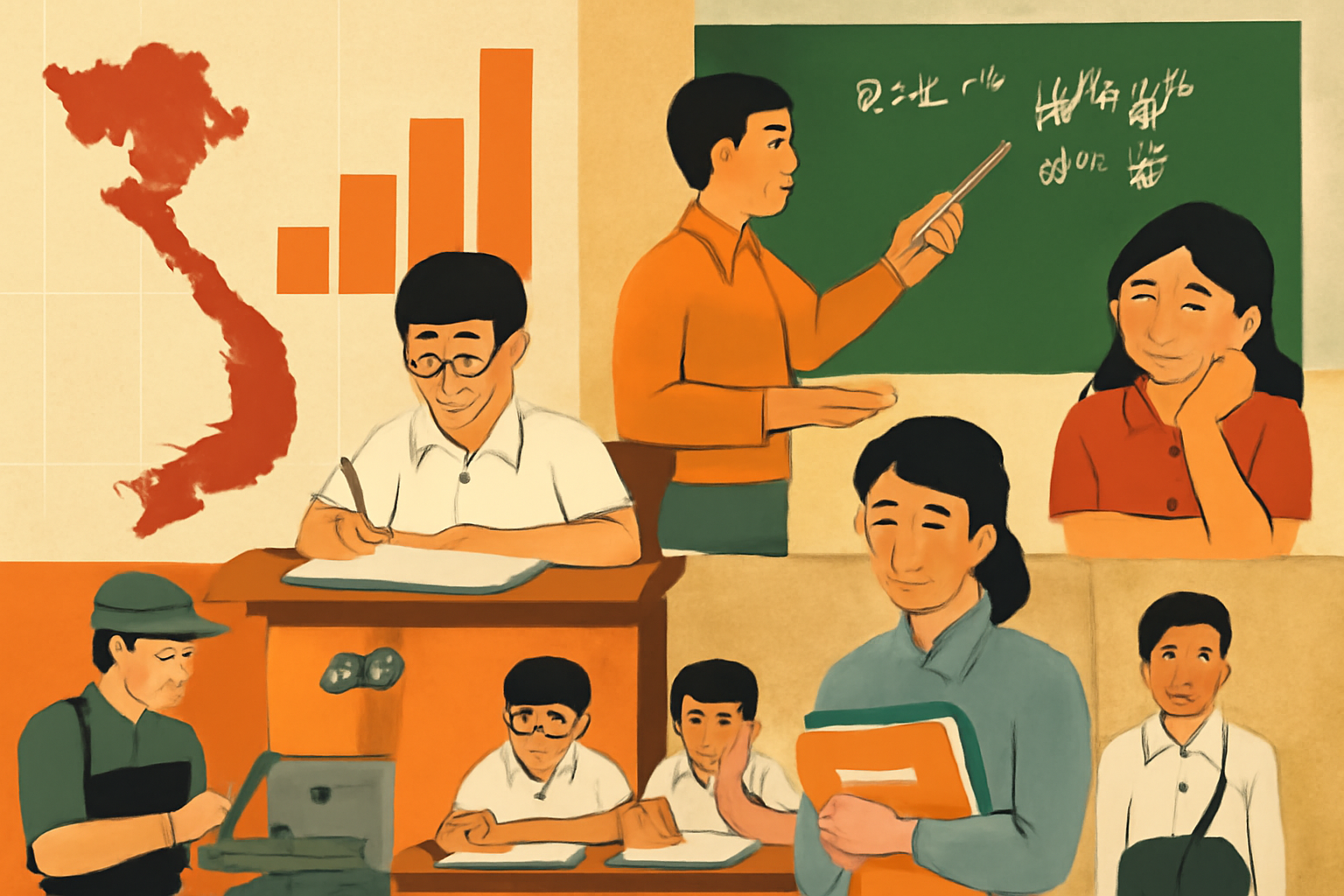
Vietnam’s educational system has undergone remarkable improvements over the past few decades. From a country that faced challenges in its education sector due to years of war and economic hardship, it has now emerged as a regional leader in academic achievement. Despite its successes, Vietnam’s education system still faces challenges that need to be addressed to ensure continued growth and development.
Achievements
A major achievement of Vietnam’s education system is its high literacy rate. The government has prioritized education and, as a result, nearly all Vietnamese adults are literate. The country has made education compulsory for children aged 6 to 14, which has contributed to widespread access to basic education.
In addition, Vietnamese students have excelled in international assessments such as the PISA tests. In particular, Vietnam has demonstrated outstanding performance in subjects such as mathematics, science, and reading. This success is impressive considering the country’s limited resources in comparison to wealthier nations.
Vietnam has also focused heavily on vocational education and training. The country has invested in developing technical education programs to equip students with skills that are directly applicable to the workforce. These vocational programs have been successful in reducing youth unemployment and helping to meet the demands of Vietnam’s growing economy.
Roadblocks
Despite these achievements, the Vietnamese education system faces several challenges. One of the primary concerns is the reliance on rote learning. The education system places a strong emphasis on memorization, which has led to high test scores but has been criticized for not encouraging creativity or critical thinking. There is a growing call for reforms that shift the focus from rote learning to problem-solving and application-based learning.
Another significant challenge is the disparity in educational quality between urban and rural areas. While schools in major cities have access to better resources and well-trained teachers, students in rural areas often face challenges such as overcrowded classrooms, outdated textbooks, and limited access to technology. This inequality leads to differing educational outcomes, with students in rural areas often struggling to keep up with their urban counterparts.
Furthermore, the shortage of qualified teachers is an ongoing issue. Despite efforts to increase the number of teachers, many educators still lack the necessary skills and training to effectively teach in the modern classroom. Professional development opportunities for teachers are limited, and there is a need for more investment in this area.
Conclusion
Vietnam’s education system has made great strides in improving access to education and achieving strong academic results. However, challenges such as the reliance on rote memorization, educational inequality, and teacher shortages need to be addressed. With continued reforms and investment, Vietnam has the potential to further enhance its education system and ensure that all students receive a high-quality education.