
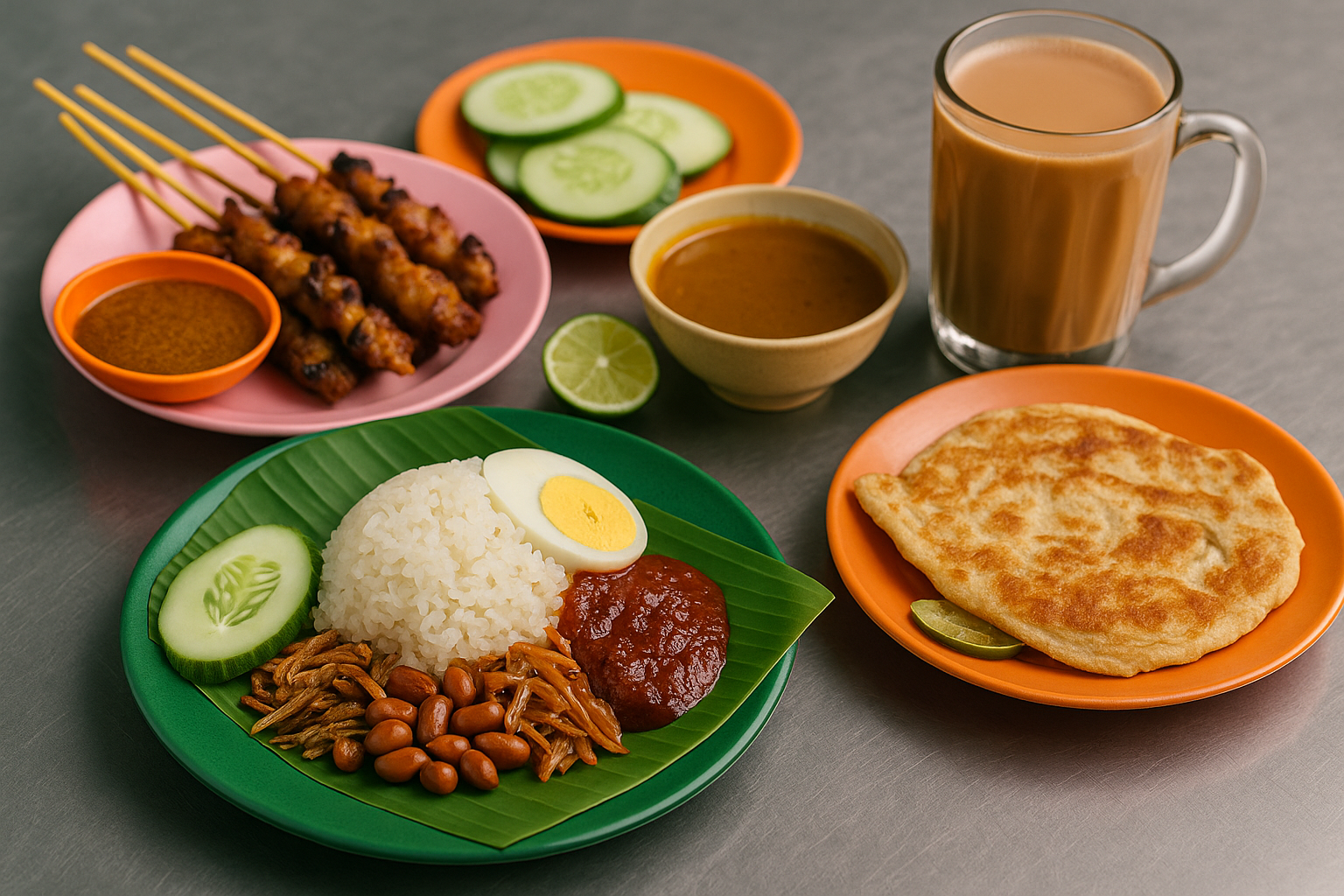
For travelers, Malaysia is a masterclass in eating well without spending much. This practical guide helps you find the iconic dishes, understand how to order, and make choices that suit your tastes and needs.
Where to eat: Seek hawker centers, pasar malam (night markets), kopitiam, and mamak stalls. These venues concentrate variety and value. In Penang, hit Gurney Drive or smaller neighborhood courts; in Kuala Lumpur, explore Brickfields (Indian), Jalan Alor (street eats), and Pudu (traditional kopitiam). In Melaka, Jonker area is dense with Nyonya fare; in Kuching, hunt for kolok mee and Sarawak laksa.
What to try (and why):
- Nasi lemak — quintessential, with sambal heat, coconut richness, and customizable sides.
- Char kway teow — wok hei and seafood sweetness; look for vendors cooking per order over charcoal.
- Laksa trio — curry (creamy), Penang asam (sour), Sarawak (aromatic and balanced).
- Roti canai + dhal — textural satisfaction and gentle spices; add fish or chicken curry for punch.
- Nasi kerabu or nasi dagang — east-coast specialties showcasing herbs and coconut technique.
- Banana leaf rice — an abundant, vegetarian-friendly spread with pickles, vegetables, and curries.
- Cendol — the perfect cool-down with pandan jelly and gula Melaka.
How to order: Most vendors speak Malay and English; pointing works. Useful phrases: “kurang pedas” (less spicy), “tak pedas” (not spicy), “bungkus” (to go), “makan sini” (eat here). At nasi campur or economy rice, prices vary by selection; ask “berapa?” (how much?) after choosing. For halal needs, look for “HALAL” certification or dine at Malay/mamak establishments.
Dietary considerations: Halal options are abundant. Vegetarians can thrive at Indian eateries (thali, banana leaf, dhal, vegetable curries) and Chinese Buddhist restaurants; ask for “vegetarian” or “tanpa daging.” Shellfish allergies require vigilance with laksa, char kway teow, and sambals—confirm “tiada udang/udang kering.” Gluten is generally low in rice-based dishes but present in soy sauces and noodles; choose rice dishes when uncertain.
Hygiene and etiquette: Busy stalls with high turnover are a good sign. Watch food handling and cleanliness. Bring tissues (napkins aren’t guaranteed). At banana leaf restaurants, folding the leaf toward you after eating is a polite gesture. Tipping isn’t expected, but rounding up is appreciated.
Budgeting and timing: Breakfast and late-night snacks are cultural rituals—join in for roti at midnight or kaya toast at dawn. Peak hours can mean lines for famous spots; lesser-known vendors often serve equally stellar food. Prices in hawker centers are modest; seafood and specialty restaurants cost more but offer fresh, regional catches.
Beyond the classics: Try otak-otak (spiced fish mousse), ikan bakar with air asam, Hokkien mee in dark soy, chicken rice with silky poached bird, and kuih for portable sweets. In Sabah and Sarawak, seek hinava, tuhau, and indigenous greens for flavors you won’t find in Peninsular Malaysia.
With a curious palate and a few key phrases, you’ll navigate Malaysia’s foodscape like a local—sampling, sharing, and discovering that the nation’s greatest attraction may well be its next plate.