
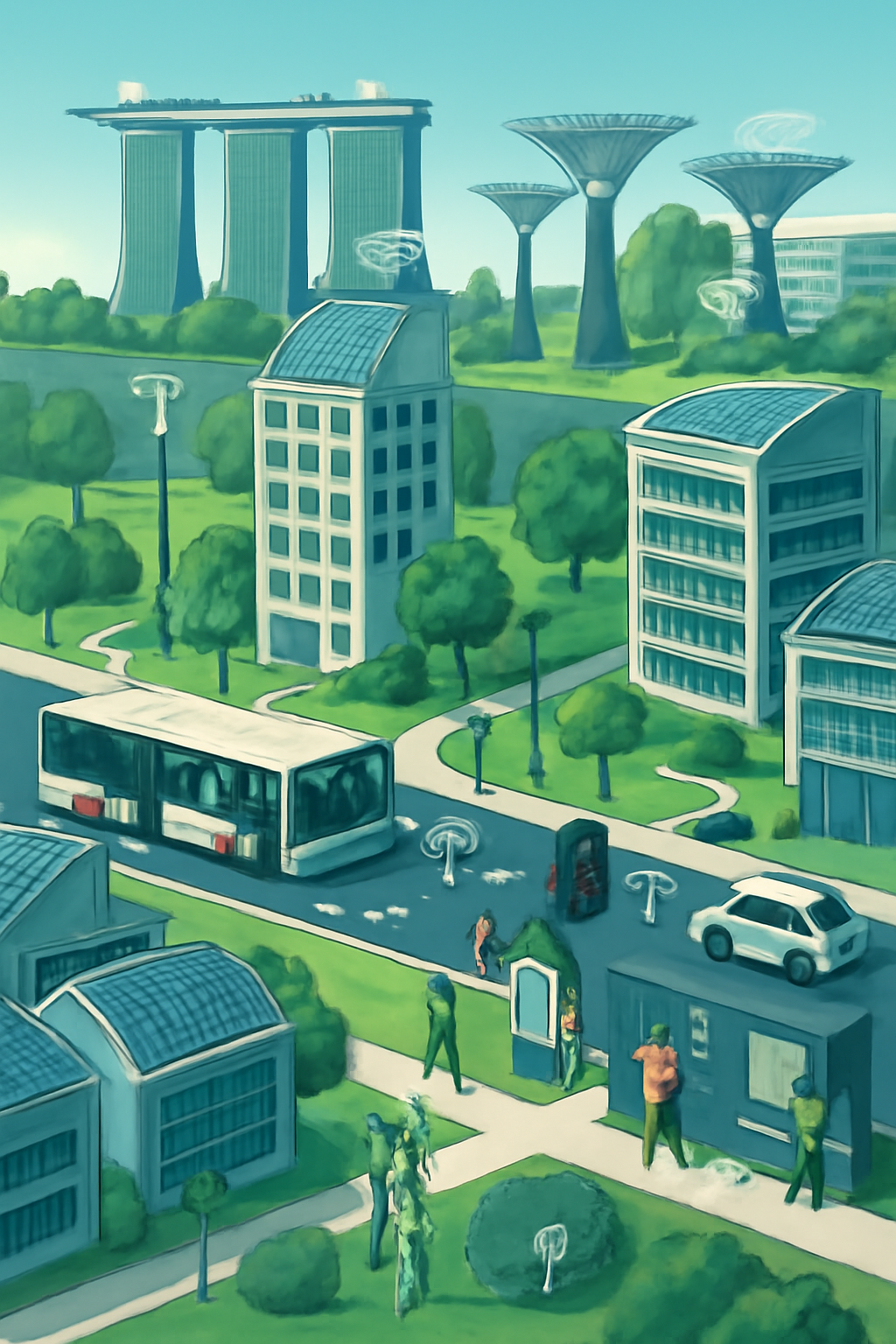
Singapore has earned its reputation as a pioneering smart city, thanks to its forward-thinking approach to technology and innovation. By integrating digital tools and infrastructure into daily life, the city-state is enhancing the quality of life for its citizens while also creating a model for urban development that other cities around the world can look to for inspiration.
A key element in Singapore’s smart city development is its reliance on big data. The city has deployed a vast network of sensors across its urban landscape, which collect data on everything from traffic patterns to air quality. This data is then analyzed to generate actionable insights that improve city planning and public services. For example, smart traffic lights adjust to real-time traffic flow, minimizing congestion and reducing emissions.
The transportation sector has been significantly improved with the introduction of smart technologies. Singapore’s MRT and bus systems are among the most advanced in the world, providing commuters with real-time information about schedules and wait times. The city has also pioneered cashless payment solutions for public transportation, making commuting more convenient for everyone. Furthermore, Singapore is exploring the potential of autonomous vehicles, which could one day transform the way people travel within the city.
In terms of residential living, Singapore is embracing smart home technology. Many new homes are equipped with IoT devices that allow residents to control everything from lighting to security systems with their smartphones. These technologies not only offer greater convenience but also contribute to energy savings by optimizing energy use.
Sustainability is a driving force behind Singapore’s smart city initiatives. The city is committed to reducing its carbon footprint by adopting renewable energy sources and optimizing energy distribution. Solar panels are widely used across buildings, and smart grids allow for more efficient energy use. This focus on sustainability is also reflected in the design of buildings, many of which are constructed with green roofs and energy-efficient materials.
Public spaces have not been left behind in the city’s technological transformation. Smart sensors in parks and public areas monitor environmental conditions and provide real-time data on air quality. These innovations help ensure that Singapore remains one of the most livable and sustainable cities in the world.
In conclusion, Singapore’s smart city journey is a testament to the power of technology in improving urban life. By incorporating innovation across transportation, homes, sustainability, and public services, Singapore is setting the standard for cities of the future