
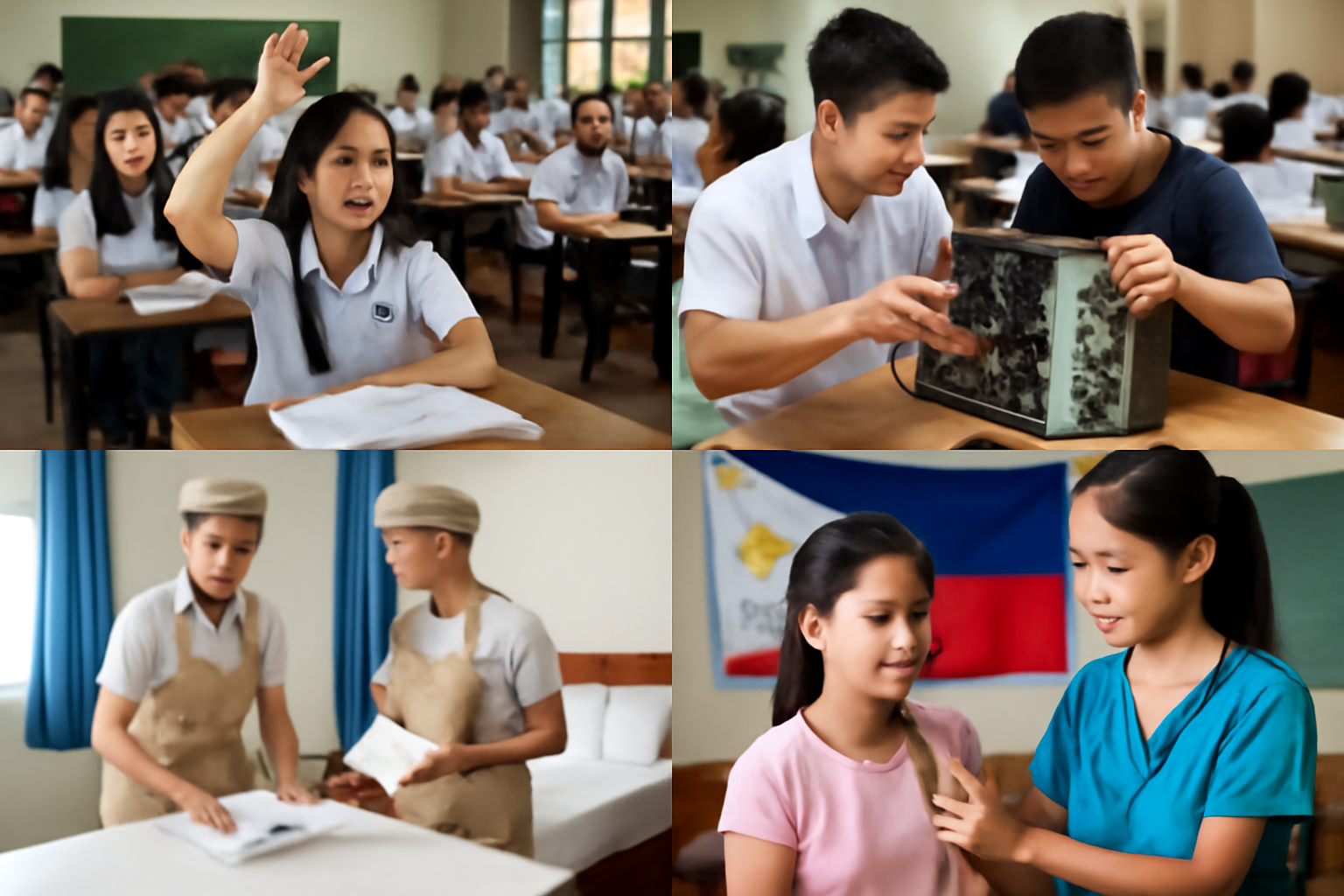
The education system in the Philippines is central to the country’s vision of a prosperous future. As the world becomes increasingly interconnected and competitive, the need for an educated and skilled workforce has never been more crucial. In response to this, the Philippine government has implemented various reforms to ensure that the next generation is well-equipped to succeed.
A key reform in Philippine education is the K-12 program, which was introduced in 2013. This reform extended the basic education cycle to 12 years, offering students the opportunity to undergo a more comprehensive and diverse learning experience. The addition of senior high school has been particularly impactful, as it gives students the chance to choose from several specialized tracks, such as academic, technical-vocational, and arts and design. These tracks allow students to tailor their education to their personal interests and career goals.
The technical-vocational track, in particular, plays a vital role in preparing students for immediate employment after graduation. Through programs offered by institutions such as TESDA, students gain practical skills in fields such as construction, information technology, and healthcare. These programs are crucial in addressing the skills gap in the Philippine labor market, particularly in industries that require highly trained workers.
Additionally, the integration of technology into education has been a game-changer for many students. The use of digital tools and online learning platforms has allowed students to access a wider range of educational materials, making learning more interactive and engaging. This helps students develop critical thinking, creativity, and problem-solving skills—traits that are essential in the modern workforce.
However, despite these strides, challenges remain, particularly in rural areas where resources and infrastructure are limited. The government continues to invest in programs to bridge these gaps, ensuring that all Filipino students, regardless of their location, have access to quality education.
Through continued investments in education and skills development, the Philippines is paving the way for a generation of young individuals who are ready to meet the challenges of the future. With a focus on both academic excellence and practical skills, the country is setting the stage for a competitive workforce that can thrive in a rapidly changing world.