
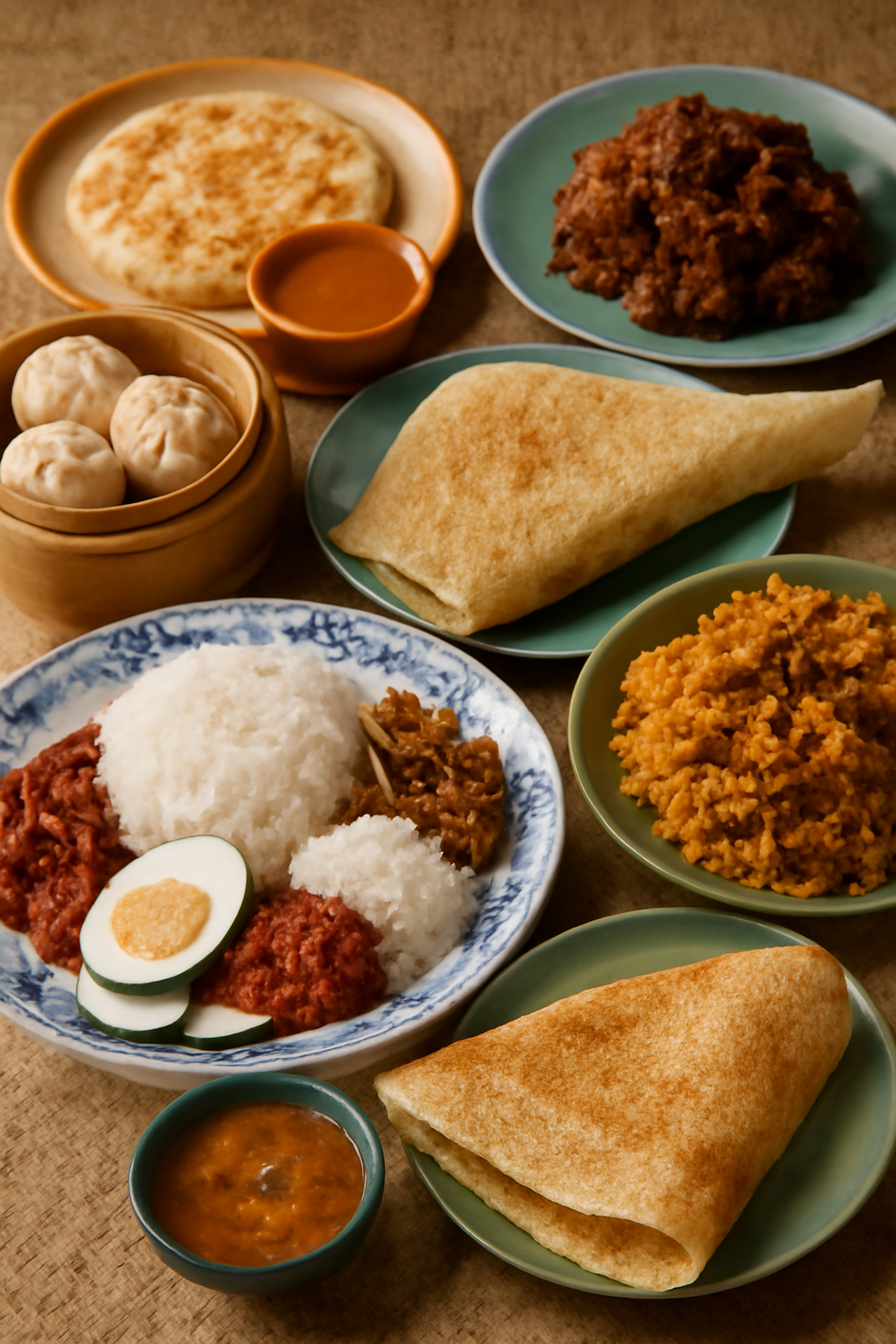
Food in Malaysia is one of the most striking aspects of the country’s cultural diversity. As a nation inhabited by different ethnic groups, Malaysian cuisine is a fusion of Malay, Chinese, Indian, and indigenous culinary traditions. Each ethnic group brings its own distinctive flavors and ingredients, making the country’s food scene rich, varied, and uniquely Malaysian.
Nasi lemak, considered the national dish of Malaysia, is an excellent example of the fusion of Malay, Chinese, and Indian influences. This dish consists of rice cooked in coconut milk, served with sambal (spicy chili paste), boiled eggs, fried anchovies, and peanuts. Though it originated in the Malay community, it has become a beloved dish across all ethnic groups.
Rendang, although originally from Indonesia, is also a favorite dish in Malaysia, especially among the Malays. This slow-cooked beef stew is rich in spices like turmeric, ginger, and coconut milk. It is often served during major festivals such as Hari Raya Aidilfitri.
For the Chinese community, dishes like Dim Sum, Char Kway Teow, and Bak Kut Teh are widely popular. Dim Sum, which consists of small dumplings and buns, is a favorite breakfast or brunch item, while Char Kway Teow, stir-fried flat noodles with prawns and egg, is a well-loved street food dish. Bak Kut Teh, a herbal pork soup, is another dish with strong Chinese cultural ties.
The Indian community brings their own distinctive flavors to Malaysian cuisine, with dishes such as Roti Canai, Nasi Biryani, and Thosai. Roti Canai, a flatbread served with curry, is a staple for breakfast or supper. Nasi Biryani, a fragrant rice dish made with spices and meat, is often served during celebrations. Thosai, a type of crispy pancake made from rice flour, is often enjoyed with lentil curry.
In addition to the dishes from the Malay, Chinese, and Indian communities, indigenous cuisines such as those from the Iban, Kadazan, and Dayak communities offer their own unique flavors. These dishes often include rice, corn, and various meats and fish cooked using traditional methods.
Food in Malaysia is not just about sustenance; it is a celebration of cultural diversity. With each dish telling the story of an ethnic group’s history, food plays a crucial role in uniting Malaysians and promoting mutual understanding. It is a beautiful representation of how various cultures can coexist and thrive together in a harmonious society.